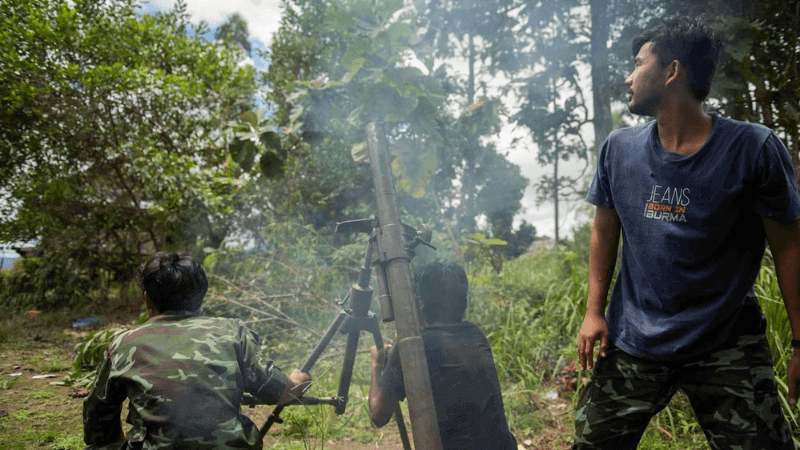
Myanmar has witnessed relentless resistance against the military coup that unfolded on February 1, 2021. The ensuing protests, strikes, and various forms of opposition have faced brutal retaliation from the military junta, resulting in the loss of thousands of lives. The impact on the nation, as described by the United Nations, has been devastating, marked by escalating violence, human rights violations, and atrocities. The armed resistance against the military junta has grown significantly, with various ethnic armed organizations joining forces against a common enemy – the desire to overturn Myanmar's military-dominated political system and establish a federal democracy, granting self-determination to ethnic minorities.
In a recent interview conducted by Al Jazeera, members of various armed resistance groups shared their personal stories, each characterized by unique backgrounds and motivations. These accounts provide insight into the individual narratives that contribute to the broader struggle for democracy in Myanmar.
Ma Wai, 32, Bamar People’s Liberation Army (BPLA):

Ma Wai's journey began with peaceful street demonstrations after the coup, but the military's brutal response pushed her towards armed resistance. Her initial hesitation was rooted in concerns about supporting her family financially. However, her commitment to resisting the military prevailed. After joining a people’s defence force (PDF), Ma Wai later found her way to the BPLA, founded by activist and poet Maung Saungkha. Her story reflects the challenges and transformations faced by those choosing the path of armed resistance.
Khun, 31, Karenni Nationalities Defence Forces (KNDF):

Returning from Malaysia in 2019, Khun's optimism for a brighter future in Myanmar was shattered by the coup. He became actively involved in supporting resistance efforts, coordinating supplies for those joining armed groups. His decision to join the KNDF in 2022 was driven by a deep-seated desire for positive change and the autonomy of Karenni ethnic people. Despite challenges posed by displacement and intensified fighting, Khun remains optimistic, emphasizing the importance of unity in the face of adversity.
Nehemiah, 23, Chin National Army (CNA):

Nehemiah's dedication to the armed struggle began in 2019, driven by a commitment to protecting the land of his ethnic Chin people and establishing an autonomous Chin nation. Despite challenges in coordination due to diverse linguistic backgrounds in Chin State, Nehemiah emphasizes the significance of unity to sustain the momentum on the battlefield. He remains determined to continue the fight until victory is achieved.
Noble, 24, People’s Defence Force Dawei District:

Noble, a university student union leader, became an active participant in nonviolent protests and civil disobedience following the coup. Her family faced persecution, with her mother serving time in prison. In response, Noble enlisted in a PDF and later joined the People’s Defence Force in Dawei District. Her harrowing experience during a military raid on her camp highlighted the sacrifices made by those in the resistance. Noble draws strength from fallen comrades, determined to press on despite the challenges.
These personal narratives emphasize the diverse motivations and sacrifices within Myanmar's armed resistance. Despite facing brutal repression, displacement, and loss, individuals like Ma Wai, Khun, Nehemiah, and Noble continue their fight for democracy and human rights. Their stories also illuminate the broader struggle for self-determination, autonomy, and justice that resonates across ethnic groups in Myanmar.
BOB Post