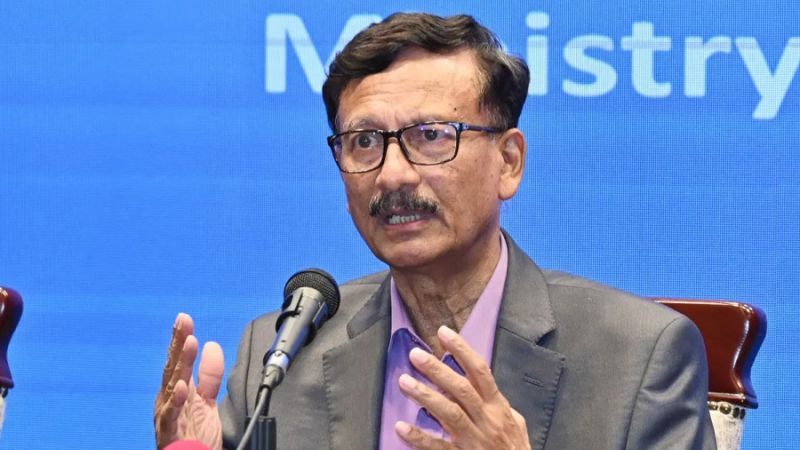
Foreign affairs advisor Md Touhid Hossain on Saturday(November 23) emphasized the need for a unified national approach to tackle the escalating Rohingya crisis, compounded by the ongoing civil war in Myanmar’s Rakhine State.
Speaking at a national dialogue on Rohingya policy, organized by the South Asian Institute of Policy and Governance (SIPG) of North South University at the Bangladesh Institute of International and Strategic Studies. Here Touhid underscored the absence of a cohesive strategy in Bangladesh’s handling of the issue.
“We have achieved far less than we could have due to the lack of a national consensus on Rohingya policy,” he remarked, urging political parties to come together for a unified stance.
Touhid stressed the importance of developing a minimum level of deterrence not for conflict but to showcase Bangladesh’s strength and facilitate multilateral negotiations. “Myanmar must come to the table. If they are unwilling, they need to understand there will be consequences,” he said.
He reiterated the necessity of ensuring the safe and dignified repatriation of the displaced Rohingya population to Myanmar with guaranteed rights and protections.
Describing the Rohingya crisis as Bangladesh’s most urgent international challenge, Touhid noted its worsening nature and called for sustained international support to manage the situation.
Since July, over 50,000 more individuals from Myanmar, including Rohingyas and other ethnic groups, have sought refuge in Bangladesh, fleeing intense clashes between Myanmar’s military and the Arakan Army (AA), which now controls about 80% of Rakhine State.
While acknowledging Bangladesh’s inability to engage directly with non-state actors like the AA, Touhid highlighted the importance of factoring in the AA’s control over Rakhine in resolving the crisis. He also recommended providing Rohingya children with education up to grade 10 and skills training to prepare them for eventual repatriation.
Khalilur Rahman, the high representative of the chief adviser for Rohingya and priority affairs, warned that global attention to the Rohingya issue was dwindling. However, he noted the government’s efforts to renew focus through a planned UN Conference on Rohingya early next year.
BNP standing committee member Amir Khasru Mahmud Chowdhury echoed the need for a comprehensive policy and national consensus. He stressed the importance of strengthening border security and trade ties with Myanmar, stating, “A weak country cannot negotiate effectively.” He also emphasized improving relations between the Rohingyas and Rakhine communities for long-term peace.
Jamaat-e-Islami leader AHM Mamidur Rahman Azad highlighted security risks in south-eastern Bangladesh due to the Rohingya population in Cox’s Bazar and called for better healthcare and education facilities for them.
SIPG director Professor SK Tawfique M Haque praised Bangladesh’s extensive humanitarian efforts despite the country not officially recognizing the Rohingyas as refugees. He proposed granting refugee status and exploring measures like a “safe zone” or “humanitarian corridor,” as suggested by the chief adviser, to manage further influxes from Myanmar effectively.
The dialogue highlighted the urgent need for a unified, strategic, and humane approach to address the protracted crisis.
BOB Post