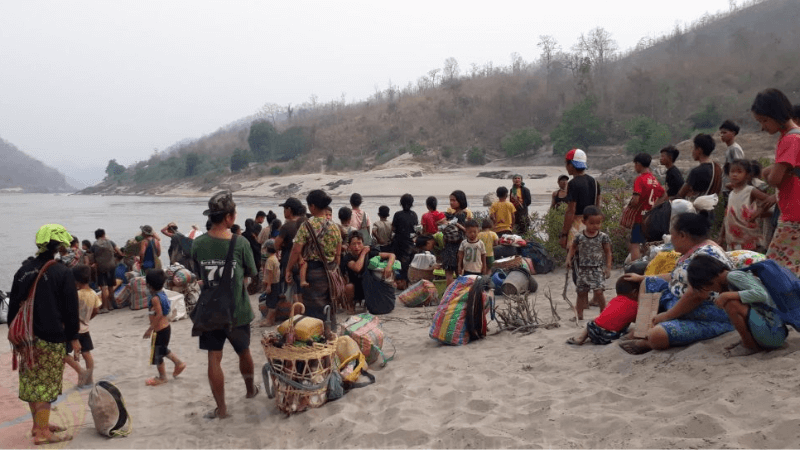
Thailand's proposed joint humanitarian taskforce with Myanmar's military junta is met with skepticism and concerns, raising questions about its true impact on the ongoing humanitarian crisis. Critics highlight four key reasons why the initiative may inadvertently serve the junta's interests rather than providing genuine aid to internally displaced persons (IDPs).
The establishment of the taskforce is seen as conferring legitimacy upon Myanmar's junta, which faces international condemnation for its brutal crackdown on dissent and human rights abuses. Engaging with the junta at an official level, even under the pretext of humanitarian aid, could be interpreted as endorsing its rule and undermining efforts to hold it accountable on the global stage.
Concerns abound regarding the taskforce granting the junta access to sensitive information about IDP locations, numbers, and vulnerabilities. While ostensibly required for aid distribution, this data could be exploited for military purposes, such as targeting ethnic minority groups or strategically relocating populations. Historical instances of the junta manipulating humanitarian aid fuel fears of information misuse.
The junta retains ultimate control over aid distribution within Myanmar, raising the risk of essential humanitarian assistance being weaponized. There's a potential for aid to be withheld from perceived opposition communities or used as a tool to reward loyalty. Instead of alleviating suffering, the taskforce might inadvertently contribute to the junta's control over vulnerable populations.
Engaging with the junta through the taskforce may normalize its unacceptable behavior and divert attention from the root causes of the humanitarian crisis – the military coup and ongoing human rights violations. Without addressing these underlying issues, any humanitarian effort risks being short-lived and unsustainable, leaving IDPs trapped in a cycle of dependence and vulnerability.
Human rights groups and Myanmar civil society organizations echo these concerns. The Karen Human Rights Group emphasizes the risk of legitimizing the junta and providing them unfettered access to IDP data for potential repression. The Arakan Women's League urges Thailand to prioritize genuine human rights solutions and pressure the junta to cease violence and allow unhindered humanitarian access. While Thailand seeks stability along its border with Myanmar, critics caution against short-term stability achieved through engagement with the junta, potentially at the long-term cost of empowering a brutal regime and jeopardizing regional security. The Thai-Myanmar Taskforce proposal remains shrouded in uncertainty. Its success hinges on ensuring true humanitarian principles guide its operation, with independent international oversight and guaranteed unfettered access to IDPs in all areas.
BOB Post