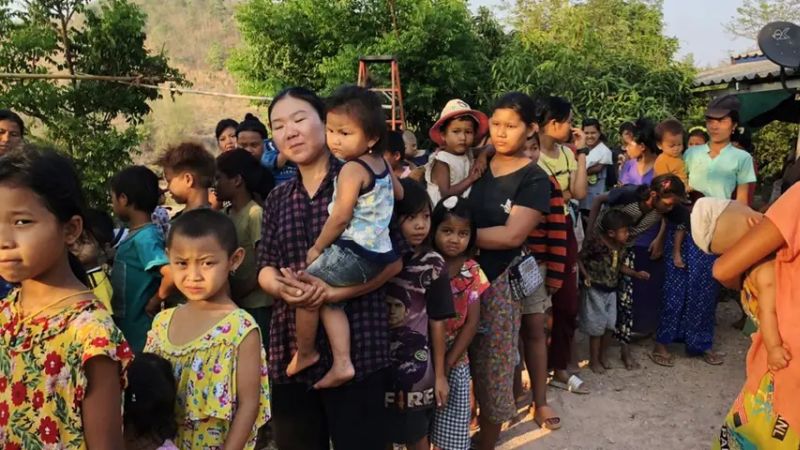
Thailand faces a growing influx of migrants from Myanmar, many of whom are illegal immigrants fleeing civil unrest in search of a better life. This migration has persisted for years, driven initially by Myanmar's military dictatorship and now exacerbated by the military coup in 2021 and recent forced recruitment laws. Many young Burmese are attempting to escape to neighboring countries, particularly Thailand. Some migrants seek to enroll in educational institutions and apply for residency as students, while others go underground, hoping to eventually find work and legalize their status.
The Thai government has maintained a strict stance, establishing detention centers and controlled camps that limit refugees' ability to integrate. Over the last four months, authorities arrested nearly 200,000 Myanmar nationals as part of their crackdown on illegal immigration. According to the Thai Ministry of Labor, 256,213 migrant workers had their documents checked, resulting in arrests that included over 193,000 Burmese, 39,000 Cambodians, 15,000 Laotians, and 7,000 others. Around 1,830 illegal migrant workers faced prosecution, while others were fined or detained to be repatriated.
Myanmar's military confirmed the repatriation of approximately 1,000 Burmese workers from Thailand in August, a move that has raised concern among human rights organizations. The Myanmar Humanitarian Action Centre called this an unprecedented restriction, noting that repatriated refugees often face detention or forced military conscription. The Thai government has defended its crackdown as a means to protect employment opportunities for its citizens, with migrant workers prohibited from working in 27 professions reserved for Thais.
Thailand is home to an estimated two million Myanmar nationals, many of whom work in agriculture, hospitality, and other sectors. Most live without proper documentation, having crossed the border in hopes of securing a "Certificate of Identity" that would allow them to stay and work legally. In addition, around 100,000 Burmese refugees live permanently in government-run camps along the border, which are closed to the outside world.
According to the UN Refugee Agency (UNHCR), the number of refugees in these camps has been rising since Myanmar's civil war resumed in 2021. With Thailand not being a signatory to the 1951 Refugee Convention and lacking a national legal framework for refugee protection, many Burmese refugees find themselves in a precarious legal and social limbo, unable to travel to third countries or integrate into Thai society.
BOB Post