




In recent weeks, Thailand has shown signs of reconsidering its Myanmar policy, indicating a shift towards a more proactive role in addressing the multifaceted crisis next door. Prime Minister Srettha Thavisin's administration is taking steps to play a more robust role in resolving the ongoing humanitarian crisis, evident in the long queues outside the Thai embassy in Yangon.
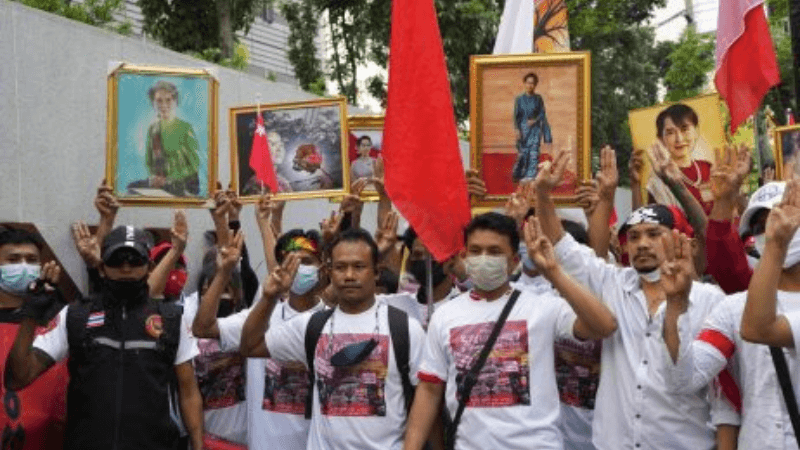
Myanmar is embroiled in a protracted, violent conflict between the military junta (Tatmadaw) and various opposing forces, including pro-democracy dissidents and ethnic armed organizations (EAOs). Since the 2021 coup, the conflict has claimed over 50,000 lives, including at least 8,000 civilians.
While the Tatmadaw retains control in core territories like Yangon, Mandalay, and Naypyidaw, its influence in peripheral territories, especially in the north, is questionable. Popular disillusionment and internal splintering within the military have led to inefficiencies, contributing to the loss of control over roughly half of the country's territory.
Given these circumstances, it becomes crucial for Myanmar's neighbors, particularly Thailand, to play a more active role in brokering peace. The extensive Myanmar-Thailand border, spanning over 2,400 kilometers, and the influx of refugees into Thailand underscore the importance of Thailand's involvement in resolving the crisis.
Under the new administration of Prime Minister Srettha Thavisin, there are visible shifts in Thailand's approach to the Myanmar issue. In a December 2023 interview, Prime Minister Srettha expressed determination to take a lead role in engaging with the Tatmadaw to address the escalating conflict. The appointment of Gen. Songwit Noonpakdee, known for his independence from the Tatmadaw, as the head of the country's armed forces further emphasizes a change in leadership dynamics.
Efforts by the current Thai bureaucracy to step up international and multilateral initiatives for peace in Myanmar are also noteworthy. Deputy Prime Minister and Foreign Minister Parnpree Bahiddha-Nukara, at the World Economic Forum meeting in Davos, highlighted Thailand's intention to collaborate with ASEAN and other external partners in advancing regional peace.
Thailand's recent policy announcements indicate a greater role in spearheading humanitarian efforts and engagement. Thai Vice Foreign Minister Sihasak Phuangketkeow announced plans to establish a "humanitarian safe zone" near the Mae Sot-Myawaddy border crossing, collaborating with ASEAN and the Red Cross to provide aid to local communities and displaced persons.
Despite these positive developments, concerns linger about the effectiveness of humanitarian efforts, particularly in addressing the needs of the 2.6 million internally displaced persons in Myanmar. Additionally, questions arise about the Tatmadaw's willingness to negotiate in good faith, given its historical views on certain political groups.
Experts suggest that the pivot in Thailand's Myanmar policy may be premature, citing enduring ties between the Thai and Myanmar militaries as a potential obstacle. However, recent events indicate a growing worry within Thailand about the Tatmadaw's ability to control the border and address issues like migrant and drug trafficking.
Thailand's strategic recalibration includes hedging between the junta and rebels, given widespread animosity toward the military in Myanmar. The recent enactment of compulsory military service has fueled an exodus of individuals from the country, emphasizing the urgency of Thailand's role in the crisis.
As Thailand navigates its evolving Myanmar policy, it is crucial for the country to engage with ASEAN partners, leverage its geopolitical strength in Myanmar, and pursue diplomatic avenues. The Thai government must work closely with humanitarian organizations to address the broader refugee crisis and contribute to a more comprehensive settlement program.
Myanmar serves as a litmus test for Thailand's foreign policy and regional standing. How the new government handles the ongoing violence will determine its commitment to democratic and humanitarian norms.
BOB Post