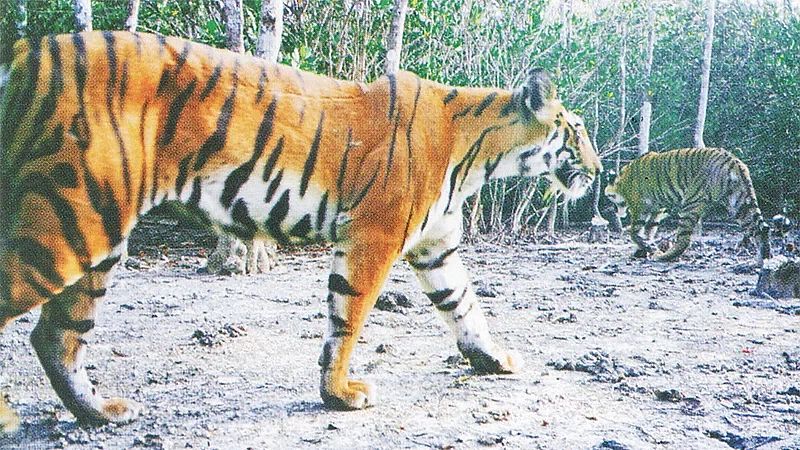
A recent survey conducted by the Forest Department reveals that the tiger population in the Sundarbans, the only habitat for tigers in Bangladesh, has increased by 11 over the past six years. The growth was most notable in the Khulna district, while a decline was observed in the Satkhira region due to poaching and a drop in prey numbers.
The survey, which covered a 2,240-square-kilometer area, involved the use of 657 cameras, which captured 7,297 photos of tigers from a total of 31,482 images. Additionally, a spot survey covering 1,306 kilometers of canal banks helped determine the population density of the tigers. The average presence of 2.62 tigers was found in every 100 square kilometers of the area.
In total, 84 tigers were captured in camera traps, and another 41 were identified through pugmark analysis. However, concerns were raised about the male-to-female ratio, especially in the Khulna region, where only one male tiger was found compared to 12 females.
While the number of cubs has risen from five in previous surveys to 21 this year, indicating a positive trend for future growth, poaching remains a significant threat, particularly in the Satkhira range. The report calls for further efforts to protect and increase the tiger population, highlighting concerns over illegal wildlife trafficking.
The Forest Department remains optimistic about increasing tiger numbers with continued conservation efforts.
BOB Post