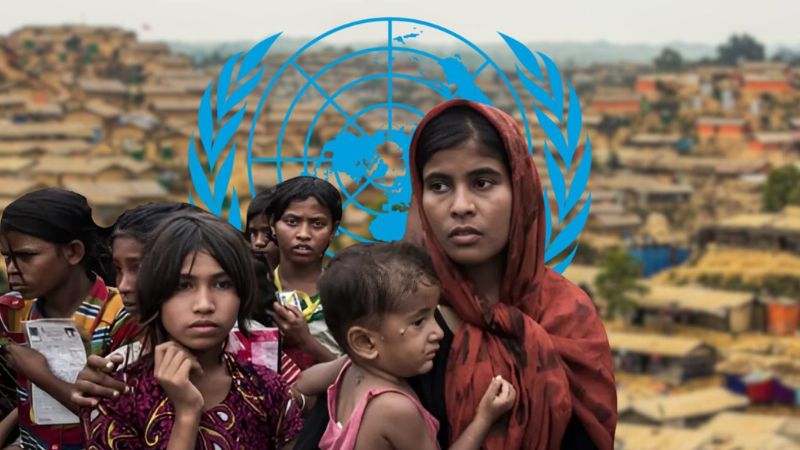
The United Nations General Assembly has adopted a resolution to convene a high-level conference on the Rohingya crisis in 2025. The conference aimed at finding sustainable solutions for one of the world's most pressing humanitarian issues.
The resolution, titled "The situation of human rights of Rohingya Muslims and other minorities in Myanmar," was jointly proposed by the Organization of Islamic Cooperation (OIC) and the European Union (EU). It received wide international support, co-sponsored by 106 member states, and was adopted by consensus.
The resolution outlines the need for an all-stakeholder high-level conference to develop a comprehensive, innovative, and actionable plan to resolve the crisis. It specifically calls for ensuring the voluntary, safe, and dignified return of Rohingya Muslims to Myanmar and addressing the root causes of their displacement.
The initiative for the conference followed a proposal by Dr. Muhammad Yunus, Chief Adviser of Bangladesh, during the high-level week of the 79th UN General Assembly in September 2024.
Focus on Accountability and Human Rights
The resolution condemns widespread human rights violations against Rohingya Muslims and other minorities in Myanmar, including killings, the burning of homes, restricted access to humanitarian aid, and the forced recruitment of civilians, including children. It reaffirms the UN's commitment to holding perpetrators accountable through appropriate judicial processes.
The resolution also underscores the critical role of the Association of Southeast Asian Nations (ASEAN) in addressing the crisis, highlighting its efforts to implement its five-point consensus for peace and stability in Myanmar.
Bangladesh’s Call for Action
Ambassador Muhammad Abdul Muhith, Bangladesh’s Permanent Representative to the UN, emphasized the urgent need for international efforts to ensure the safe, voluntary, and dignified repatriation of Rohingya refugees. Describing the prolonged crisis as a burden on Bangladesh, he expressed frustration over the lack of progress in addressing the root causes over the past seven years.
“For regional and global security, it is crucial to create conditions for the Rohingyas’ return to Myanmar,” Ambassador Muhith stated. He also called for increased funding to support humanitarian efforts for the refugees while they remain displaced.
BOB Post