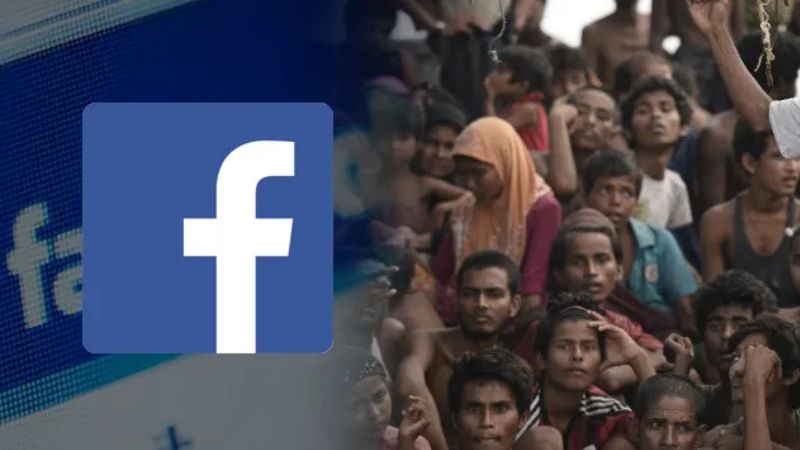
Facebook has contributed to the propagation of hate speech in Myanmar, according to U.N. human rights experts looking into a potential genocide there on Monday (November 18).
The social media giant has not yet commented on these allegations, though it has previously stated efforts to combat hate speech in Myanmar by removing offending content and banning users who repeatedly violate its policies.
Since a security crackdown began in August last year, over 650,000 Rohingya Muslims have fled Myanmar's Rakhine State to neighboring Bangladesh. That recounting harrowing experiences of executions and sexual violence by Myanmar’s security forces. U.N. Human Rights Chief Zeid Ra’ad al-Hussein has said he strongly suspects acts of genocide occurred, though Myanmar’s national security adviser has called for “clear evidence.”
Marzuki Darusman, chair of the U.N. Independent International Fact-Finding Mission on Myanmar, emphasized the pivotal role social media has played in deepening conflict. “Social media has substantively contributed to acrimony and conflict in Myanmar,” he stated. “As far as the Myanmar situation is concerned, social media is Facebook, and Facebook is social media.”
Yanghee Lee, another U.N. investigator, described Facebook as integral to public, civil, and private life in Myanmar, noting the government’s reliance on it to communicate with the public. However, she warned of its darker implications, stating, “While Facebook has helped Myanmar in many ways, it has also been weaponized to spread hate speech. Ultra-nationalist groups and hard-liner Buddhists have used it to incite violence and hatred against the Rohingya and other ethnic minorities.”
Lee added, “Facebook has turned into a beast, far from its original intention.”
Prominent nationalist monk Wirathu, recently ending a one-year preaching ban, denied that his anti-Muslim rhetoric fueled violence in Myanmar's Rakhine State. Facebook, responding last month to queries about Wirathu’s account, stated its commitment to addressing hate speech. “If a person consistently shares content promoting hate, we may take actions such as temporarily suspending their ability to post or, ultimately, removing their account,” the company explained.
New media plays a crucial role in protecting free speech and the rights of minorities in Myanmar. By offering platforms for marginalized voices to be heard, documenting human rights abuses, and challenging state-controlled narratives. In a country where traditional media is often censored or biased, digital platforms empower activists, journalists, and communities to share their stories with the world, raising awareness and fostering accountability. While the misuse of social media has been linked to spreading hate speech, its potential as a tool for advocacy, education, and solidarity remains vital for safeguarding democratic values and promoting inclusivity in Myanmar’s diverse society.
BOB Post