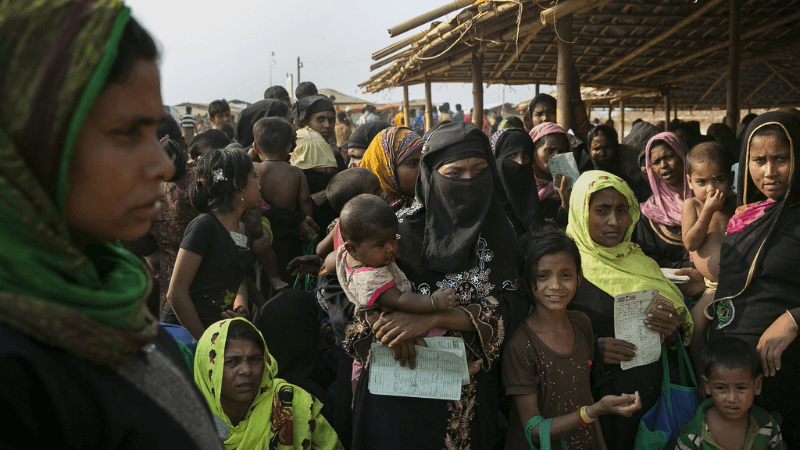
In a stark plea for action, the United Nations issued a call on Wednesday for heightened support for the Rohingya refugees stranded in camps in Bangladesh, where insufficient funding has left many facing severe shortages of food and other essentials.
The annual response plan outlined by the United Nations appealed for a substantial $852.4 million to deliver vital assistance to the predominantly Muslim Rohingya refugees in Bangladesh and the communities hosting them.
With approximately a million individuals from the largely stateless minority residing in Bangladesh, a significant number fled a brutal military crackdown in Myanmar in 2017, exacerbating an already dire humanitarian situation.
Highlighting the vulnerability of Rohingya households in Bangladesh, the United Nations refugee agency (UNHCR) emphasized that 95 percent of them rely on humanitarian aid for survival.
"The escalating conflict in Myanmar underscores the urgent need for international solidarity with Bangladesh and robust refugee protection measures," stated the UNHCR.
Despite a previous appeal for $876 million in aid last year, only a fraction of that amount, $440 million, was received, leaving a substantial gap in funding crucial relief efforts.
Warning of the dire consequences of ongoing funding shortfalls, the UNHCR stressed the urgent necessity for sustained assistance to address the basic needs of the Rohingya refugees.
A significant portion of the aid recipients are women and children, who face heightened risks of exploitation and gender-based violence, with more than half of the refugees in the camps being under the age of 18.
The joint response plan spearheaded by the UN encompasses 117 partners, with nearly half of them being Bangladeshi organizations. The initiative aims to provide aid to approximately one million Rohingya refugees in Cox's Bazar camps and on Bhasan Char island, as well as nearly 350,000 individuals from host communities.
Allocations from the aid fund will cover crucial areas such as food, shelter, healthcare, clean water access, protection services, and education, among others.
Amidst the grim conditions in the overcrowded camps, characterized by lawlessness and growing desperation, an increasing number of Rohingya refugees are resorting to perilous sea voyages in attempts to reach Malaysia and Indonesia.
Meanwhile, prospects for repatriating the refugees to Myanmar remain bleak, compounded by the country's military junta seizing power in a 2021 coup, following the exodus of Rohingya in 2017.
Describing the human rights situation in Myanmar as a "never-ending nightmare," UN rights chief Volker Turk condemned the military rule's widespread atrocities, which continue unabated amidst global indifference.
BOB Post