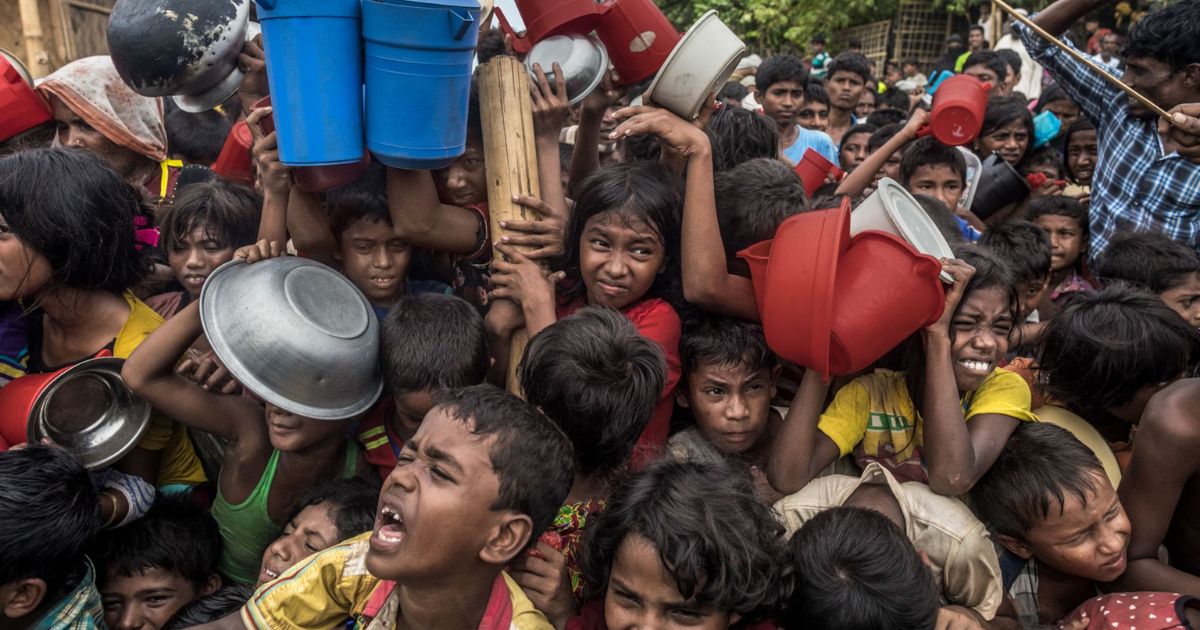
The United Nations has called for ongoing international support to protect nearly one million Rohingya refugees in Bangladesh and to find lasting solutions to their crisis.
This plea was made as the world marked Rohingya Genocide Remembrance Day, seven years after approximately 750,000 Rohingya fled Myanmar’s Rakhine State during a brutal military crackdown and sought refuge in Bangladesh.
In a statement, the UN Refugee Agency (UNHCR) acknowledged the international community's efforts in assisting Bangladesh with protection and basic needs. However, it noted that recent security challenges and funding uncertainties have hampered all but the most critical and life-saving aid.
UNHCR urged donors and private entities to increase their financial support for the Rohingya crisis, highlighting that humanitarian agencies have appealed for $852 million to assist 1.35 million people, including Rohingya refugees and their Bangladeshi hosts, in 2024.
"The Rohingya people deserve our best, as do the generous people of Bangladesh who cannot be left to shoulder this crisis alone."
The agency also welcomed Bangladesh's renewed commitment to the refugees, as expressed by interim government Chief Adviser Professor Muhammad Yunus. "We echo Dr. Yunus's call for continued solidarity from the international community through consistent financial support and helping to ensure their 'eventual repatriation to Myanmar, with safety, dignity, and full rights.'"
"Bangladesh's humanitarian spirit, at a time of transition for the Bangladeshi people, deserves global appreciation," the statement added.
The UNHCR reiterated that a dignified and sustainable return to Myanmar remains the primary solution to the crisis and urged the international community to show the political will necessary to achieve this.
In light of ongoing conflict between Myanmar forces and rebels in Rakhine, the UNHCR also called on Bangladesh to ensure that civilians fleeing violence in Myanmar are granted protection in Bangladesh.
UN Secretary-General Antonio Guterres, through his spokesperson Stephane Dujarric, called on all parties in Myanmar to cease violence and protect civilians. Guterres also urged the strengthening of regional protection efforts, access to conflict-affected communities, and further support for host countries.
Julie Bishop, the UN Secretary-General's Special Envoy on Myanmar, is engaging with all stakeholders, including regional actors, to move towards a Myanmar-led process for sustainable peace and national reconciliation, according to Dujarric.
These efforts, he said, are crucial to creating conditions for the voluntary, safe, dignified, and sustainable return of the Rohingya people to Myanmar.
US Secretary of State Antony Blinken noted that the ongoing humanitarian crisis and human rights violations in Myanmar are worsening conditions for many ethnic and religious minorities, particularly the Rohingya.
In a statement, Blinken affirmed the US's commitment to supporting survivors of the Rohingya genocide with life-saving assistance. Over the past seven years, the US has contributed nearly $2.4 billion and continues to document the atrocities committed against the Rohingya and other civilians.
"Our support for the people of Burma in their aspirations for a democratic, inclusive, and peaceful future is unwavering, as are our calls on all parties to protect civilians from harm."
Australia's Department of Foreign Affairs and Trade also issued a statement, reaffirming its support for international accountability for human rights violations in Myanmar. The department called on the Myanmar regime to cease violence, engage in dialogue, and grant safe and unimpeded humanitarian access.
"We support ASEAN's efforts to resolve the crisis through the work of the ASEAN Chair and Special Envoy and consistent with the Five Point Consensus. We continue to support the people of Myanmar and their aspirations for a return to the path of democracy."
BOB Post