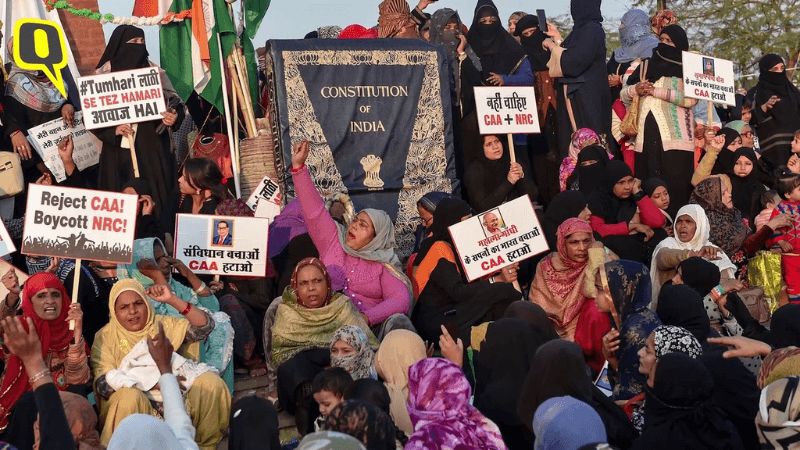
The United States has announced its close scrutiny of India's implementation of the Citizenship Amendment Act (CAA), which aims to streamline the process of granting Indian citizenship to persecuted migrants from neighboring countries.
The Act, designed to facilitate citizenship for undocumented non-Muslim migrants from Pakistan, Afghanistan, and Bangladesh, has faced criticism for excluding Muslims. However, Home Minister Amit Shah has defended the Act, stating its purpose is to aid minorities facing religious persecution in these nations. He emphasized that Muslims from these countries can still apply for Indian citizenship under existing laws.
Responding to queries on whether the US views the CAA as a potential threat to religious freedom, State Department Spokesperson Matthew Miller expressed concerns and pledged to closely monitor its implementation.
"We are concerned about the notification of the Citizenship (Amendment) Act on March 11. We are closely monitoring this Act - how this Act will be implemented," Miller informed reporters during a daily briefing.
He underscored the importance of upholding religious freedom and ensuring equal treatment under the law for all communities, emphasizing these as fundamental democratic principles.
India officially enforced the Citizenship (Amendment) Act 2019 on Monday, reducing the qualification period for citizenship application from 11 to 5 years for eligible migrants who arrived in India before December 31, 2014.
In response to apprehensions among Indian Muslims, the government issued a statement assuring that the CAA will not impact their citizenship status. It reiterated that the Act is solely focused on granting citizenship and reaffirmed the equal rights of Indian Muslims alongside their Hindu counterparts.
Government officials have consistently emphasized that the CAA is not aimed at revoking citizenship from any existing citizens of the country.
BOB Post