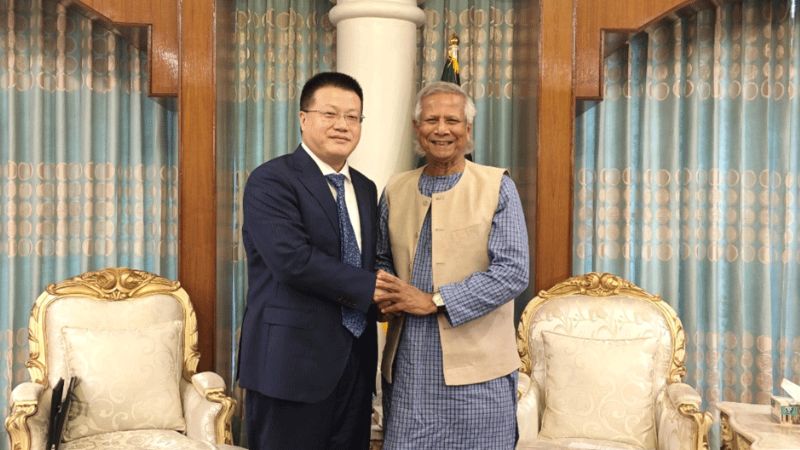
Chinese Ambassador to Bangladesh Yao Wen has described Chief Adviser Prof Mohammad Yunus' upcoming visit to China as a "very successful, productive, and milestone visit," with expected significant announcements to deepen bilateral relations.
Speaking to journalists after a meeting with Foreign Secretary Md Jashim Uddin, Ambassador Yao said, "We are working very closely with Bangladesh... We are still having discussions." He hinted at upcoming announcements but remained tight-lipped about specific details, urging all to "wait and see."
This high-level visit coincides with the 50th anniversary of diplomatic ties between Bangladesh and China, marking an important moment in their relationship. During the visit, Chief Adviser Prof Yunus is scheduled to meet Chinese President Xi Jinping in their first-ever bilateral meeting, which is expected to pave the way for increased cooperation.
Foreign Adviser Touhid Hossain confirmed that while no agreements would be signed, a few Memorandums of Understanding (MoUs) are likely to be finalized. Chief Adviser’s Press Secretary Shafiqul Alam emphasized the significance of the visit, quoting Ambassador Yao as saying that this would be "the most important visit by a Bangladeshi leader in 50 years."
One of the key focuses of the discussions will be the relocation of Chinese factories to Bangladesh, a move aimed at transforming the South Asian nation into a major manufacturing hub. This potential shift could enhance Bangladesh’s position in the global supply chain, attract increased foreign direct investment (FDI), and generate employment opportunities.
Geopolitical and Economic Importance of Bangladesh
Bangladesh’s growing strategic and economic significance makes this visit crucial in the evolving geopolitical landscape. Situated at the crossroads of South and Southeast Asia, Bangladesh is a critical link in China’s Belt and Road Initiative (BRI). Its geographical positioning offers China an entry point to the Bay of Bengal and access to South Asian markets, making Dhaka an essential partner in Beijing’s regional expansion strategy.
Economically, Bangladesh has been one of the fastest-growing economies in the world, with a strong textile and garment industry that contributes significantly to global supply chains. The country is also diversifying its manufacturing base, making it an attractive destination for factory relocations as global companies look for alternatives to China amid rising labor costs and geopolitical tensions.
Additionally, Bangladesh plays a balancing role in South Asia, maintaining good relations with both China and India. This equilibrium allows Dhaka to extract economic and strategic benefits from both regional giants, positioning itself as a key player in South Asian geopolitics.
As Prof Yunus embarks on this landmark visit, analysts expect Bangladesh-China relations to strengthen further, potentially unlocking new avenues for trade, investment, and technological collaboration.
BOB Post