The Modi government has raised concerns about the alleged persecution of minority communities in Bangladesh following the mass coup on August 5, which led to the escape of India’s long-time ally, Sheikh Hasina. According to sources, Indian Prime Minister Narendra Modi avoided meeting with Muhammad Yunus in New York, citing dissatisfaction with the interim government’s inaction on addressing the purported minority rights abuses. Despite this, the chief advisor of the Bangladesh interim government, Muhammad Yunus, successfully completed a high-profile international tour, garnering support from the U.S., further intensifying India's concerns.
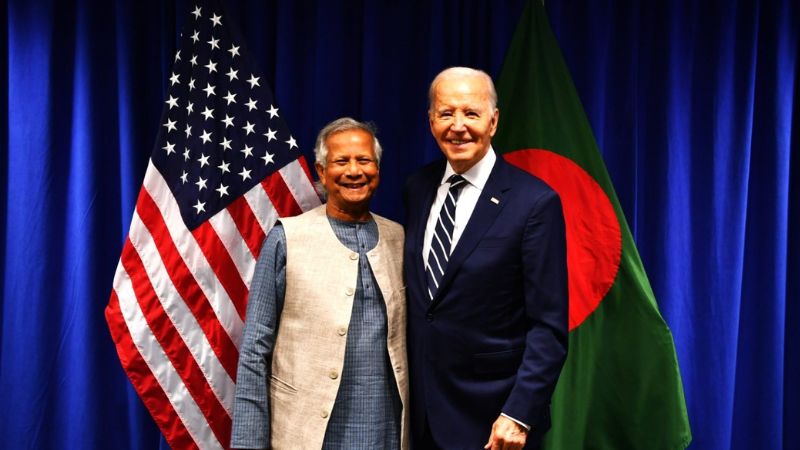
During his visit, Yunus delivered a speech at the UN General Assembly and held discussions with key global leaders, including U.S. President Joe Biden, former President Bill Clinton, U.S. Secretary of State Antony Blinken, Canadian Prime Minister Justin Trudeau, and officials from the European Commission, World Bank, and Asian Development Bank. The main theme of these meetings was Western and American backing for the interim government of Bangladesh, with promises of future strategic, commercial, and economic cooperation.
Political analysts suggest that the interim government's current strategy is to reduce Bangladesh's dependency on India, which has raised alarm in New Delhi. Yunus’ diplomatic outreach also extended to meetings with Pakistani Prime Minister Shahbaz Sharif and Chinese Foreign Minister Wang Yi, signaling potential efforts to revive SAARC and strengthen Bangladesh-Pakistan relations. This move towards rapprochement with Pakistan has further unsettled India, which currently lacks diplomatic leverage to influence Dhaka-Islamabad relations in the coming days.
Yunus’ decision to deliver his UN speech in Bengali is seen as an assertion of Bangladesh’s national identity, transcending religious lines. It is also a message that even though leadership has changed, the country’s identity remains rooted in its nationhood, not just religious affiliations. This interim government, analysts say, has gained significant political legitimacy within Bangladesh, adding to Delhi’s growing apprehension.
BOB Post