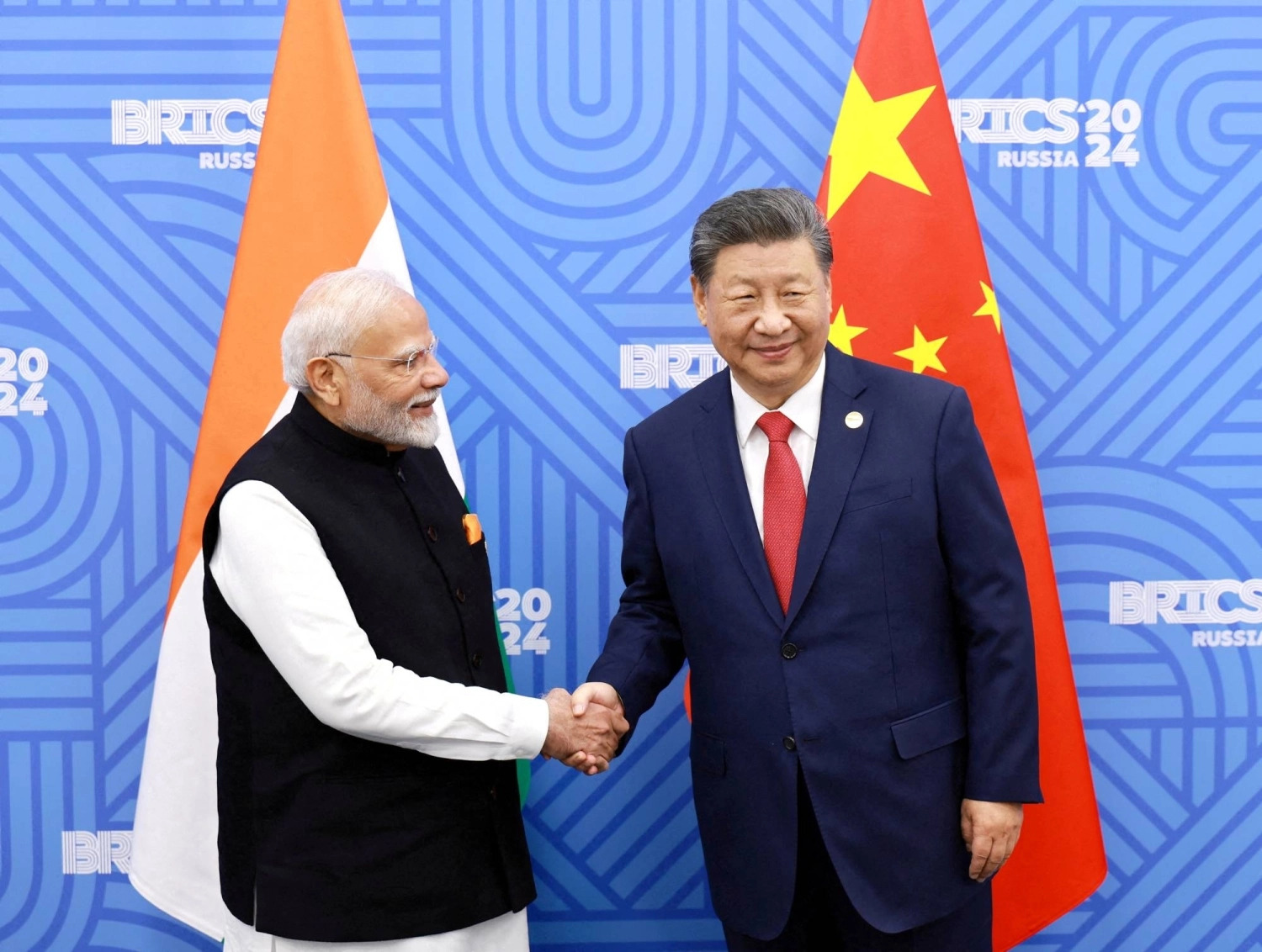
Chinese President Xi Jinping’s expected visit to New Delhi this week could give a fresh push to strained China-India relations, but major obstacles remain in the economic relationship between the two Asian powers.
Xi’s possible visit, his first to India in seven years, comes as Beijing and New Delhi have taken steps to ease tensions following the deadly 2020 border clash. Yet companies on both sides continue to face investment restrictions, visa problems and delays in access to Chinese-made industrial equipment.
Xi is expected to travel to New Delhi for the BRICS summit, although Beijing has not officially confirmed the visit. A meeting with Indian Prime Minister Narendra Modi would be closely watched for signs of a broader reset in bilateral relations.
The two countries have a long history of strategic mistrust. Their 1962 war left a deep mark on relations, while the 2020 border confrontation further damaged political and economic ties. Recent diplomatic contacts, however, have created some space for engagement as both countries navigate increasingly complicated relations with the United States.
According to The Japan Times, the improvement in political relations has yet to translate into a significant recovery in business ties, with companies continuing to encounter regulatory and operational barriers.
India has taken some steps to reopen its market to Chinese investment. In March, New Delhi eased restrictions introduced after the 2020 border clashes, particularly in electronics, capital goods and solar-cell manufacturing. It has also considered faster approval procedures for some joint ventures.
Several projects have since received approval, including a manufacturing partnership involving Indian electronics company Dixon Technologies and Chinese smartphone maker Vivo.
But major Chinese investors remain cautious. Vehicle manufacturers BYD and Great Wall Motor have kept planned investments in India on hold after facing tighter scrutiny from Indian authorities.
The economic uncertainty also extends to technology and industrial supplies. Indian companies rely heavily on Chinese equipment for sectors such as solar energy, electronics and infrastructure. Some machinery and components have reportedly been delayed at Chinese customs, while large tunnel-boring machines needed for Indian infrastructure projects have remained held up for more than a year.
Chinese companies operating in India also face regulatory pressure. New Delhi has blocked a proposal linked to Alipay’s integration with India’s instant payment system over national security concerns. Indian authorities are also considering an investigation into Xiaomi over alleged violations of foreign investment rules. Xiaomi has denied wrongdoing.
At the same time, Indian businesses have faced difficulties obtaining Chinese visas. Chinese authorities have also reportedly placed tighter controls on the export of some advanced equipment and technology to India.
The situation exposes a major gap in the relationship: political ties may be improving faster than economic trust.
A successful Modi-Xi meeting could help remove some of these barriers. But analysts say a single summit is unlikely to erase years of mistrust.
For India and China, the challenge is no longer simply restoring dialogue. It is turning diplomatic engagement into a more predictable economic relationship while neither side is fully prepared to abandon its strategic caution.
BOB Post