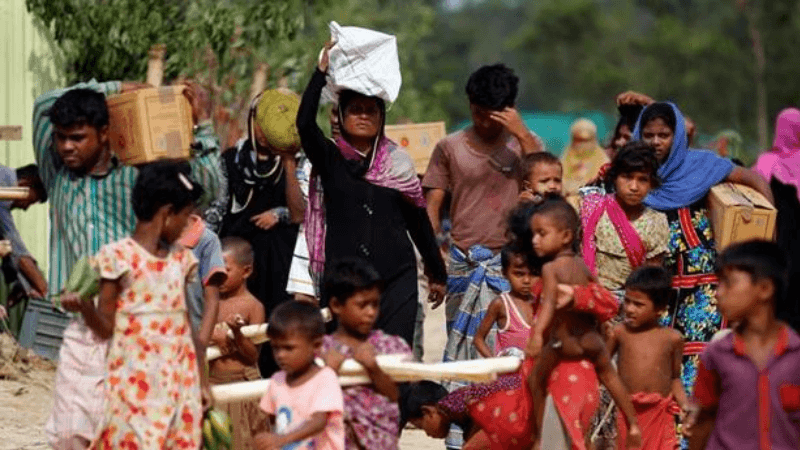
The Nagoya High Court in Japan has ordered the Japanese government to grant refugee status to Khin Maung Soe, a 44-year-old ethnic Rohingya asylum seeker from Myanmar. This ruling signifies a significant departure from Japan's usual refugee determination system, which typically prioritises individual circumstances over group identity. The court, citing the Myanmar military's ethnic cleansing against the Rohingya, particularly since the February 2021 military coup, found legitimate grounds for fear of persecution. Japan's historically stringent approach to granting refugee status is evident, with only 202 out of 3,772 applicants receiving it in 2022, including 83 from Myanmar, underscoring the challenges faced by those seeking asylum from the country.
Khin Maung Soe's case sheds light on the heightened risks faced by asylum seekers in Japan following the passage of a bill amending the Immigration Control and Refugee Recognition Act. These amendments empower the government to deport asylum seekers who apply for refugee status more than twice, with this legislative change set to take effect by June. The strict asylum policies in Japan have faced criticism, and the recent legal developments add to concerns about the treatment of refugees in the country.
The Japanese government had rejected Khin Maung Soe's refugee application four times before he filed the lawsuit in 2020. In 2017, the Rohingya community endured mass atrocities by the Myanmar military, leading to the displacement of over 730,000 Rohingya, with many seeking refuge in Bangladesh. Those who remained in Myanmar faced systematic abuses, including apartheid, persecution, and deprivation of liberty. Conditions worsened after the military coup in February 2021. Japan's asylum system granted refugee status to only a small fraction of applicants, emphasizing the challenges faced by individuals seeking protection.
The Refugee Convention, a treaty ratified by Japan, upholds the principle of nonrefoulement, prohibiting the return of individuals to places where they would face persecution, torture, or other ill-treatment, or a threat to life. Upholding these principles is crucial for ensuring that refugees, such as Khin Maung Soe, are not forcibly returned to situations of harm. Advocates further emphasize the importance of establishing independent bodies to oversee refugee applications and appeals, as recommended by the Japan Federation of Bar Associations, contributing to a fair and just process for asylum seekers.
BOB Post