US President Donald Trump and leaders of NATO member states are set to hold high-level talks in Turkey amid growing security challenges across Europe and the Middle East, with regional conflicts, defense spending, and the war in Ukraine dominating the alliance's agenda.
The summit comes at a time of heightened geopolitical tensions, as NATO seeks to reinforce unity while responding to Russia's continued military campaign in Ukraine and instability across the wider Middle East. According to an RFI report, alliance leaders are also attempting to manage differences with Washington while demonstrating greater European responsibility for regional security.
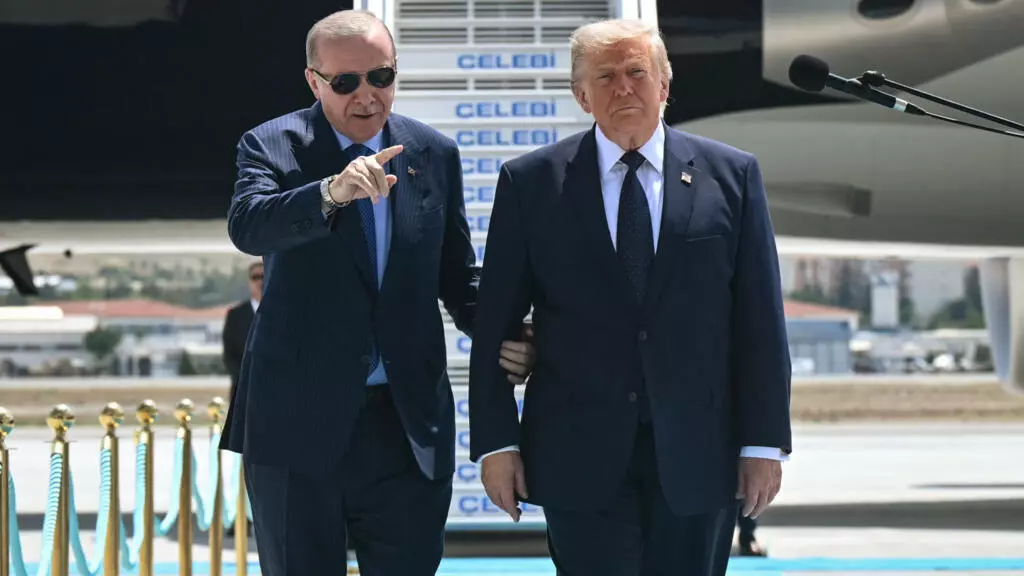
Upon arriving in Ankara, Trump praised Turkish President Recep Tayyip Erdoğan, describing their relationship as one built on strong "chemistry," while again criticizing several European allies over defence commitments. He reiterated his dissatisfaction with NATO's past burden-sharing arrangements and urged members to accelerate military spending.
Ahead of the summit's main session, NATO released updated figures showing European allies increased core defence spending by 11 percent in 2026 to approximately $634 billion, reflecting a broader effort to strengthen deterrence as the United States encourages Europe to assume a larger security role.
NATO Secretary General Mark Rutte said European members were delivering on commitments to expand defence budgets and enhance military readiness, particularly in response to security threats posed by Russia. Several allies also announced new defence procurement agreements worth billions of dollars ahead of the leaders' meeting.
The war in Ukraine remains a central issue. Trump said he believes both Moscow and Kyiv are interested in reaching a negotiated settlement and is expected to meet Ukrainian President Volodymyr Zelensky on the sidelines of the summit. European countries and Canada are preparing additional military assistance packages for Ukraine, including long-term financial commitments extending through 2027.
Ukraine has renewed calls for stronger air defence support and reiterated its aspiration to join NATO, arguing that continued military assistance remains essential as Russian attacks persist.
The summit also reflects NATO's increasing attention to broader regional dynamics, including the Middle East. Trump is scheduled to meet Syrian President Ahmed al-Sharaa, signalling Washington's cautious engagement with Damascus following years of conflict and ongoing diplomatic efforts to stabilize the region.
Turkey's role within the alliance is also expected to receive renewed attention. During bilateral discussions, Trump indicated the United States was considering easing sanctions imposed on Ankara and reviewing the possibility of future sales of Lockheed Martin F-35 Lightning II fighter jets. Turkey was removed from the F-35 programme in 2019 after acquiring Russia's S-400 air defence system, a dispute that has strained relations between the two NATO allies.
Regional analysts view the summit as a significant opportunity for Turkey to strengthen its strategic position between Europe, the Middle East and the Black Sea, while NATO seeks to balance support for Ukraine, reinforce collective defence and address evolving security challenges across its southern and eastern flanks.
BOB Post