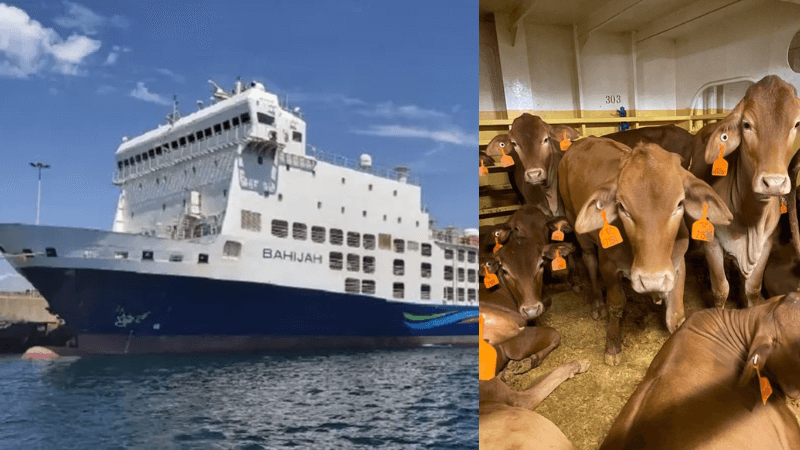
A vessel carrying approximately 14,000 sheep and 2,000 cattle is stranded off the coast of Australia, prompting concerns about the welfare of the animals. The ship initially departed Australia on January 5 bound for Israel but altered its course in mid-January due to the perceived threat of an attack by Yemen's Houthi militia. Subsequently, the Australian government directed the vessel to return home, leaving the livestock in a precarious situation.
The animals now face an uncertain fate, with potential options including discharge in Australia, subjecting them to biosecurity-mandated quarantine, or embarking on a month-long journey around Africa to reach Israel while avoiding the Red Sea. The diversion underscores the broader impact of militia activities on maritime routes, disrupting global trade and highlighting risks for Australia's live animal export industry.
Despite assertions from farm and exporter groups that the animals are in good health, concerns have been raised by animal welfare advocates, particularly given the sweltering temperatures approaching 40 degrees Celsius. Josh Wilson, Member of Parliament for Fremantle, where the ship was loaded, criticized the situation, stating, "What is being contemplated is a 60-day voyage for 14,000 sheep on a stinking hot, and literally stinking, metal vessel." This incident further amplifies existing criticisms that label the live export trade as “rotten to its core.”
Australia's agriculture ministry, while acknowledging no evidence of significant health concerns, emphasizes collaboration with the exporter and industry bodies to maintain biosecurity and animal welfare standards. The exporter, Bassem Dabbah Ltd, has sought permission from the Australian government to load additional supplies and navigate around Africa to reach Israel. However, the ship's manager, Korkyra Shipping, remains unresponsive to requests for comments.
The incident raises broader questions about the live animal export industry in Australia, a major exporter that shipped over half a million sheep and cattle last year. Israel, a crucial market, has received significant shipments from Australia. The stranding of the MV Bahijah brings attention to the challenges faced by the industry, including the impact of weather conditions, geopolitical uncertainties, and concerns about animal welfare.
Australia's commitment to live animal exports has faced opposition, with the Labor government pledging to phase out live sheep exports in the coming years. However, this move encounters resistance from farm groups citing potential job losses and adverse effects on farming communities. The situation recalls New Zealand's decision to ban live animal exports after a 2020 incident where a vessel carrying cattle sank in rough weather, resulting in casualties and floating carcasses.
BOB Post