France's capital is on edge as disgruntled farmers and climate activists gear up for separate yet interconnected protests aimed at pressuring President Emmanuel Macron's government. While farmers threaten to "put Paris under siege" with tractors, environmental group Dernière Rénovation drew global attention by hurling soup at the iconic Mona Lisa in the Louvre Museum. The confluence of these protests highlights the deep-seated economic grievances of farmers and the growing urgency of climate activism, setting the stage for a day that could reshape the nation's discourse on agriculture, environmentalism, and cultural preservation.
Facing economic hardships, French farmers are demanding better government support, fair remuneration for their produce, and protection against cheap imports. Vowing to converge on Paris with hundreds of tractors, farmers intend to block key roads, potentially disrupting the city's daily operations. Grievances include low prices for their produce, escalating production costs, and challenges posed by foreign competition. The farmers' threat to "put Paris under siege" is not merely symbolic; they have previously hinted at using manure and blocking food distribution centers, underscoring their desperation and frustration. Their planned actions aim to draw attention to the agricultural crisis and compel President Macron's government to address their longstanding concerns.
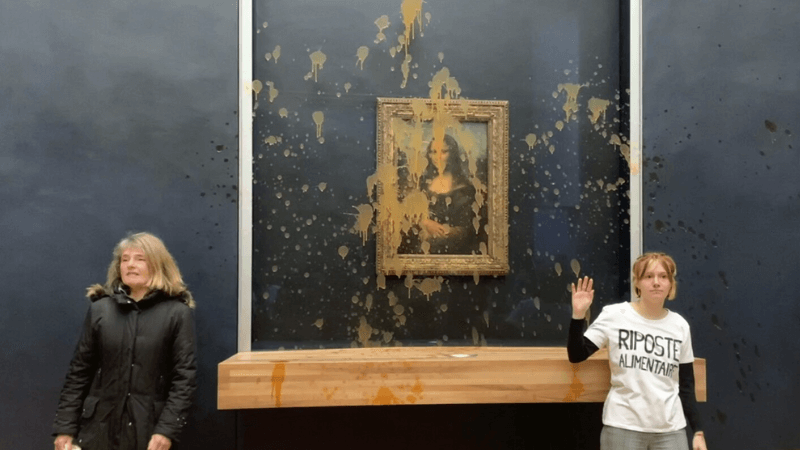
Adding complexity to the day's events, environmental group Dernière Rénovation targeted the Louvre Museum, throwing tomato soup at the protective glass encasing the iconic Mona Lisa. The group, advocating for a sustainable food system, aims to spotlight climate inaction by governments, including France's alleged failure to meet its climate commitments.
While the Mona Lisa remains unharmed, the incident raises broader questions about the intersection of climate activism, cultural preservation, and freedom of expression. It has sparked a global debate about the appropriate methods for environmental protests and how far activists should go without causing damage to cultural treasures.
President Macron now faces a challenging balancing act. He must address the legitimate concerns of French farmers while upholding the rule of law and ensuring minimal disruption to Paris. The potential for violent clashes between protesters and police raises concerns about France's international image and the impact on tourism. Moreover, the Louvre incident adds an extra layer of complexity, prompting discussions about the limits of environmental activism. Macron needs to navigate this turbulent landscape carefully, acknowledging the grievances of both farmers and activists while maintaining stability and harmony in the French capital.
The consequences of these protests could be significant. Farmers' blockades might disrupt food deliveries, leading to shortages and price hikes. Violent clashes could tarnish France's international reputation, and the Louvre incident has already ignited fierce debates about the appropriate boundaries for activism. The French government's response will be crucial. Open dialogue with both farmers and climate activists, addressing their concerns while ensuring public safety and protecting cultural heritage, is essential. Macron's ability to find solutions that balance the needs of both groups will determine the trajectory of France's discourse on agriculture, environmentalism, and activism.
BOB Post