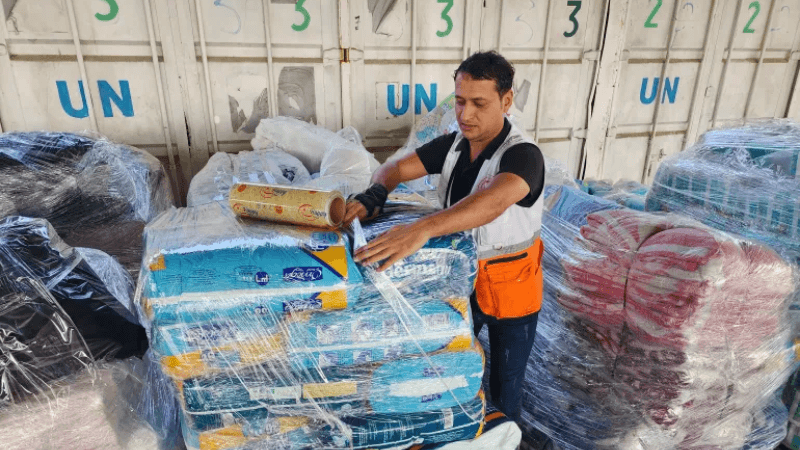
The United Nations (UN) is grappling with an alarming funding crisis as global humanitarian crises escalate, prompting the UN Office for the Coordination of Humanitarian Affairs (OCHA) to issue a stark warning. In its Global Humanitarian Overview for 2024, OCHA revealed that a staggering $46 billion is urgently needed to provide crucial aid to millions of people affected by emergencies worldwide. The funding shortfall has reached critical levels, with OCHA stating that in 2023, the agency received just over one-third of the required $57 billion, marking the most severe funding gap in several years. Despite the challenging financial circumstances, OCHA managed to deliver life-saving assistance and protection to 128 million people globally.
Martin Griffiths, the UN Under-Secretary-General for Humanitarian Affairs and Emergency Relief Coordinator, expressed deep concern about the funding situation. In a press release, Griffiths acknowledged the resilience of the humanitarian system in delivering aid to millions despite receiving only a fraction of the necessary funds. However, he emphasized the bleak outlook for 2024, highlighting the ongoing complex emergencies, including conflicts, climate emergencies, and collapsing economies, wreaking havoc on vulnerable populations.
The UN's call for $46 billion in 2024 aims to address the escalating global humanitarian needs, encompassing challenges such as hunger, disease, displacement, and other hardships. The funds are crucial to supporting essential programs related to food security, healthcare, shelter, and protection, particularly in regions facing the most severe humanitarian crises.
Several factors contribute to the existing funding shortfall, creating a precarious situation for humanitarian efforts:
1. Donor Fatigue: The simultaneous occurrence of multiple humanitarian crises worldwide may lead to donor fatigue, where nations prioritize assistance to specific regions or emergencies, leaving others under-resourced.
2. Competing Global Priorities: Global challenges such as economic downturns and geopolitical tensions can divert attention and resources away from humanitarian needs, affecting funding for critical aid efforts.
3. Inequitable Distribution of Resources: Funding tends to concentrate on a few high-profile crises, leaving other emergencies with insufficient resources to meet the escalating needs of affected populations.
Despite the pressing circumstances, OCHA has urged international donors to significantly increase their contributions to address the growing global humanitarian needs. Closing the funding gap is imperative to ensure that millions of people receive the life-saving assistance they desperately require. The humanitarian outlook for 2024 is deemed bleak, with complex crises unfolding in various parts of the world. Griffiths emphasized the need for international support to address these critical issues and mitigate the suffering of vulnerable populations.
The funding crisis also poses challenges for specific regions facing acute needs. Griffiths pointed to areas like the Middle East, including Gaza and the West Bank, as potentially being of greatest need. Additionally, the situation in Ukraine, with an impending restart of full-scale conflict, demands attention and assistance. East and Southern Africa, particularly Sudan, is also highlighted as a region facing a humanitarian crisis affecting 74 million people. Griffiths emphasized the impact of climate change, noting that climate-induced displacement now surpasses conflict-driven displacement, marking a shift in the humanitarian landscape.
Despite the escalating number and scale of crises, OCHA noted a decline in donations, prompting a revision of the 2024 target. The revised target aims to assist 181 million people, down from the initially targeted 245 million, reflecting the constrained financial environment.
BOB Post