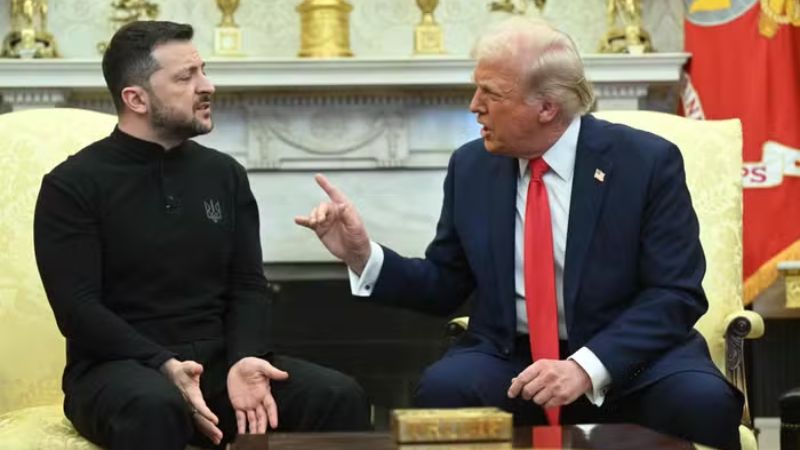
Ukrainian President Volodymyr Zelensky's recent interaction with US officials has sparked heated criticism, with top US politicians accusing him of undermining diplomatic relations. Republican Senator Lindsey Graham, once a strong advocate for Ukraine, expressed his frustration, declaring, “What I saw in the Oval Office was disrespectful, and I don’t know if we can ever do business with Zelensky again." Graham suggested that Zelensky either needs to resign or send someone over who can negotiate more effectively. This confrontation in the Oval Office, which has dominated headlines, points to an increasingly strained relationship between Ukraine and its key allies.
Democratic House Minority Leader Hakeem Jeffries joined the criticism, labeling Zelensky's actions as “appalling” and warning that such behavior would only strengthen Russian President Vladimir Putin's position. “This will only serve to further embolden Vladimir Putin,” Jeffries stated, highlighting the risks of alienating critical support amid an ongoing war.
In Ukraine, Zelensky’s staunch stance is being defended as a sign of resilience in the face of existential threats. Citizens in Kyiv expressed their gratitude for their president’s refusal to back down, despite the diplomatic fallout. One Ukrainian citizen noted, "When you look at Zelensky's face, you understand that the discussion behind the closed doors was not so polite." However, the sentiment of national pride contrasts sharply with the broader international consequences of Zelensky's approach.
European leaders have weighed in on the situation, with UK Prime Minister Sir Keir Starmer reaffirming unwavering support for Ukraine and calling for continued efforts to mediate a peaceful resolution. German political figure Friedrich Merz also voiced his support, emphasizing the importance of distinguishing between aggressors and victims in the war. Meanwhile, EU Foreign Policy Chief Kaja Kallas indicated that Europe may need to step up its leadership, suggesting a shift in the balance of power in the West’s commitment to Ukraine.
In Russia, the controversy has been met with approval. A Russian foreign ministry spokeswoman praised former President Donald Trump and Republican J.D. Vance for showing restraint during the Oval Office meeting, sarcastically remarking that it was a miracle' they hadn’t physically confronted Zelensky.
While Zelensky’s firm position is seen as a reflection of his determination to defend his country, his stubbornness in the face of rising US opposition could ultimately lead to political instability for Ukraine. The increasing discord among key allies could undermine critical military and financial support, putting Ukraine in a more vulnerable position as the war against Russia continues. If Zelensky does not adjust his approach to diplomacy, he risks turning vital allies into adversaries, further isolating Ukraine at a time when unity is more crucial than ever.
BOB Post