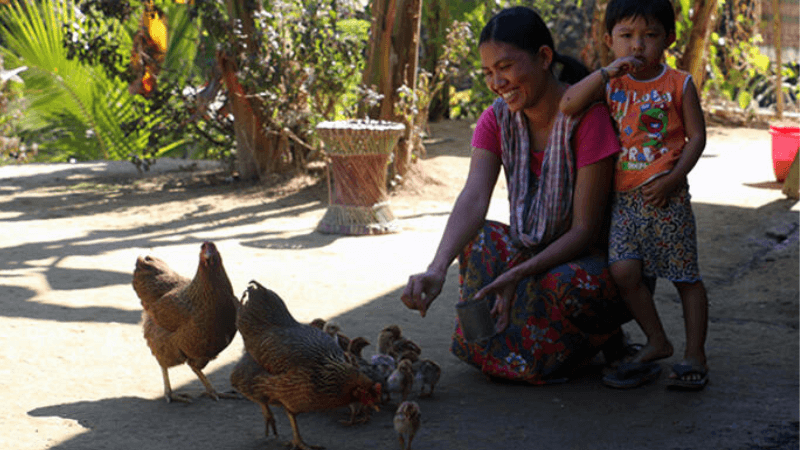
Bees, compost, and a resilient spirit are driving a peaceful transformation in the remote, hilly southeast corner of Bangladesh, where natural beauty abounds and cultural traditions run strong.
For generations, the people of the Chittagong Hill Tracts (CHT) have relied on nature’s cycles for survival, cultivating the land and fishing the rivers. But increasingly erratic weather patterns, worsening soil conditions, and limited access to education and markets have pushed many into poverty and forced dependence on unstable, low-wage labour.
Now, an initiative by the United Nations Development Programme (UNDP) is beginning to change that narrative—one household at a time.

From Jhum Fields to Honeycombs
Thuisa Pru, 52, once toiled as a day labourer after leaving school early to support his family’s Jhum (slash-and-burn) farming. As the practice grew unreliable due to climate change, his family struggled. Then came an unexpected opportunity—beekeeping.
“My wife came home from a UNDP training session, full of ideas. She couldn’t stop talking about bees,” Thuisa recalls with a smile. Inspired, he joined the next workshop.
Today, Thuisa manages 35 thriving bee colonies in the hillside, harvesting honey every 21 days. His income is now stable enough to cover household needs and invest in vegetable farming. Beyond personal success, Thuisa has become a local mentor, training others in sustainable apiculture.
“You don

’t have to leave the hills to succeed,” he says proudly. His children now attend school—an opportunity he never had.
Resilience Rooted in the Soil
Further north, in a remote village called Bhai Bon Chori in Khagrachari district, 40-year-old Nikunti Tripura has woven multiple income streams into a life once burdened by debt and uncertainty.
Through UNDP-supported training, Nikunti adopted an integrated farming model combining vegetable cultivation, pig and poultry rearing, fruit production, and vermicomposting. The once-wasted organic material from her farm is now transformed into rich fertilizer, improving yields and boosting her income.
“I used to fear the bank. Now, I’ve repaid my loans and started saving,” says Nikunti, standing beside her pigs and rows of compost beds. “I have dignity now.”
Her diversified livelihood model has become a local example of how to weather seasonal shocks and fight climate change at the grassroots.
Livelihoods That Empower and Endure
These are not isolated success stories. Across the CHT, communities trained by UNDP are turning small plots of land and simple tools into engines of opportunity. The model empowers women and youth, revives indigenous knowledge, and fosters economic resilience without harming the fragile environment.
Still, significant challenges remain. Many families lack access to the training, equipment, and markets needed to replicate these successes. Experts emphasize the need for sustained investment, inclusive policy frameworks, and stronger partnerships to scale the effort.
Yet, the journeys of individuals like Thuisa and Nikunti offer a blueprint for what’s possible.
In a region long left behind by mainstream development, the hills of Bangladesh are now alive with the hum of bees, the scent of compost, and the hope of a better future—buzzing, growing, and enduring.
BOB Post