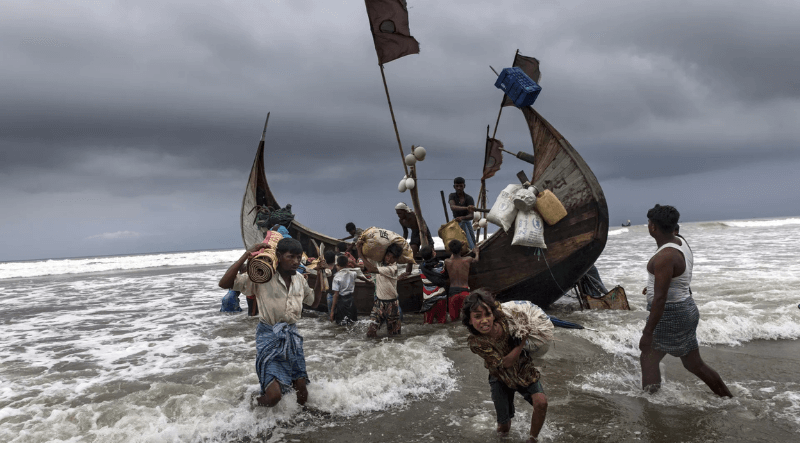
Despite assurances and unofficial diplomatic outreach by Bangladeshi envoys to the Arakan Army in Myanmar’s conflict-torn Rakhine state, the situation has deteriorated further as a staggering 113,000 new Rohingya refugees have entered Bangladesh since November 2023. The influx continues to escalate daily, leaving Bangladesh overwhelmed and questioning the effectiveness of any regional engagement
The latest figures confirm that the total number of Rohingya refugees in Bangladesh now exceeds 1.31 million, worsening an already dire humanitarian and security crisis. Government officials revealed that more than 29,600 new families have arrived, with over 53% of them being women, including a significant number of elderly and children. This comes amid rising fears that these growing numbers will make future repatriation efforts even more elusive.

Bangladesh’s Refugee Relief and Repatriation Commissioner (RRRC) has acknowledged receiving a letter from the United Nations High Commissioner for Refugees (UNHCR) last week, urging the government to provide shelter for the new arrivals. However, officials have expressed frustration, saying, “There’s no available space for constructing new shelters,” while also warning that such accommodations might act as a pull factor for more Rohingya in Rakhine to attempt crossing into Bangladesh.
Despite reported diplomatic channels being opened with the Arakan Army in hopes of reducing cross-border migration and stabilizing Rakhine, the ground reality has changed little. A senior Bangladeshi official, speaking on condition of anonymity, said:
“We initiated unofficial contacts with representatives of the Arakan Army to ensure safety for civilians and discourage further displacement. But even after those communications, the flow of Rohingyas hasn’t stopped — in fact, it’s accelerated. This only increases the pressure on Bangladesh and undermines regional trust.”
Security analysts warn that the influx is not just a humanitarian burden but also a national security concern. The current refugee camps, especially in Teknaf and Ukhiya, are overcrowded, and new arrivals are often forced to seek shelter in schools, unfinished buildings, or the homes of relatives.

The RRRC office revealed a detailed camp-wise breakdown, indicating that some camps now hold over 8,000 additional refugees each, with many others nearing saturation. UNHCR has proposed vertical expansion — building two-storey shelters — but such initiatives depend on government approval and donor funding, both of which remain uncertain.
Meanwhile, aid for the Rohingya population is shrinking. Since the U.S. administration under Trump reduced refugee aid budgets, Bangladesh has struggled to meet basic needs. Although the Joint Response Plan (JRP) still exists, annual commitments from the international community are declining, prompting fears that donor fatigue will severely impair relief efforts.
Experts say the situation is now politically and economically unsustainable.
“We are being forced to host more people with fewer resources and declining international attention,” said a senior policy advisor. “Talks with armed groups are not enough if regional stability continues to collapse. This is no longer a refugee crisis — it’s a geopolitical failure.”
As the humanitarian burden deepens, Bangladeshi authorities are urging the international community to go beyond mere statements of support and to exert serious pressure on Myanmar to create conditions conducive to voluntary, safe, and dignified repatriation. Until then, every new arrival widens the cracks in Bangladesh’s already strained refugee response system.
Bob post