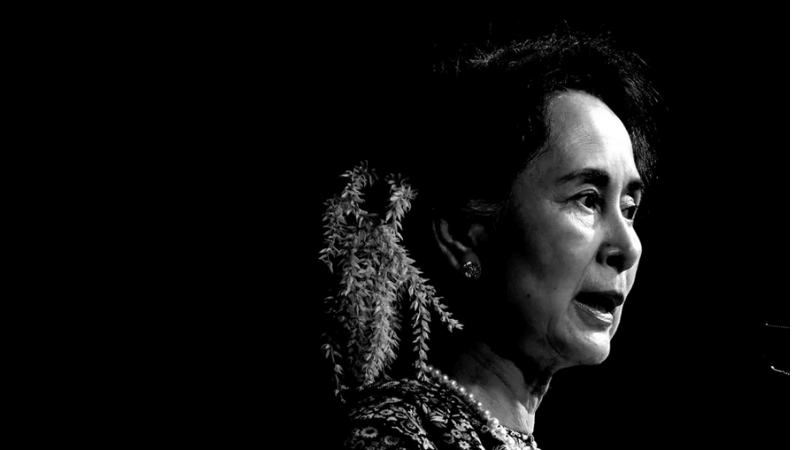
Myanmar’s ousted civilian leader and once-global democracy icon, Aung San Suu Kyi, spent her 80th birthday on Thursday under the shadow of indefinite detention, locked away by the same military she once reluctantly defended. With 27 years left to serve under politically motivated charges, her milestone passed without fanfare in the capital Naypyidaw, where the junta now orchestrates a brutal civil war against a growing armed resistance.
Suu Kyi’s only son, Kim Aris, currently in the United Kingdom, has launched a symbolic 80-kilometer run and gathered more than 80,000 birthday wishes for his mother. But with no communication beyond a single letter two years ago, Suu Kyi remains unreachable, her condition unknown. Aris fears for her health, citing heart and dental issues left untreated by the regime.
“There’s no way to celebrate when someone you love is locked away unjustly,” Aris told media, stressing the uncertainty surrounding his mother's well-being. “But we endure — because that’s all we can do.”

The quiet marking of Suu Kyi’s birthday comes as Myanmar slips deeper into political disarray and regional instability. Since the 2021 coup, the country has devolved into a multi-front civil war, with pro-democracy ethnic armed groups and People’s Defence Forces (PDFs) battling the junta’s troops in nearly every corner of the country. Once seen as a beacon of democratic transition, Myanmar now finds itself on the frontline of a global geopolitical contest.
Myanmar’s civil war has not remained a domestic issue. The country’s strategic position between China and India, its coastline on the Bay of Bengal, and its rich natural resources have turned it into a geopolitical hotspot. Beijing backs the junta to safeguard infrastructure projects under its Belt and Road Initiative, while New Delhi cautiously engages with both the military and opposition forces to contain Chinese influence. Meanwhile, Western nations have largely retreated, with international condemnation dwindling amid shifting global priorities.

As foreign powers play proxy roles, Myanmar’s people pay the price. Mass displacement, economic collapse, and war crimes allegations have turned vast areas into humanitarian crisis zones. In this context, Suu Kyi’s absence from public life symbolizes the void in non-violent political leadership.
Though once hailed globally as a democratic icon and Nobel Peace Prize laureate, Suu Kyi’s legacy remains contested. Her controversial defense of the military during the Rohingya crisis from 2016 onward alienated many of her former supporters abroad. Over 700,000 Rohingya Muslims fled into Bangladesh amid widespread atrocities — a chapter that cast a long shadow over her moral authority.
Yet, within Myanmar, Suu Kyi still commands deep respect. Despite her silence, many grassroots movements and PDFs still see her National League for Democracy (NLD) as a political North Star — albeit one they’ve moved beyond. With Suu Kyi imprisoned and the NLD disbanded, Myanmar’s resistance has shifted from peaceful protest to armed struggle, marking a historic turn in the country’s political culture.
The military’s promise of elections later this year has been dismissed by critics and opposition groups as a sham — likely to entrench military dominance rather than restore civilian rule. Many of Suu Kyi’s former followers have vowed to boycott the polls, focusing instead on armed revolution and establishing a federal democratic union by force.
If freed, Aris believes his mother may step away from political life. “She’s done more than anyone could ask,” he said. “But her imprisonment is not just a personal tragedy — it’s a symbol of Myanmar’s stolen future.”
As Aung San Suu Kyi marks her 80th birthday in silence, Myanmar stands at a historic crossroads: one where democracy remains an aspiration, resistance has turned militant, and geopolitical powers circle like vultures over a wounded nation.
BOB Post