Chief Advisor Muhammad Yunus made an impassioned plea for unified global action on two of the world’s most pressing humanitarian crises — the plight of Palestinians and the ongoing challenges faced by Rohingya refugees in Bangladesh.
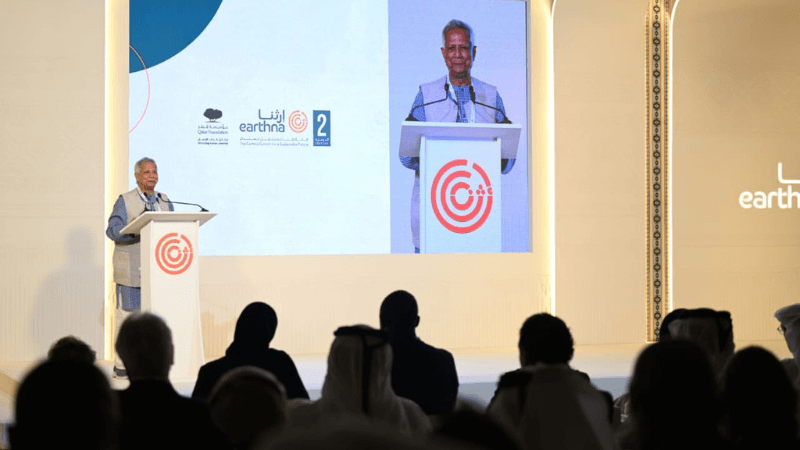
Speaking at the opening session of the Earthna Summit in Doha, Qatar, Yunus urged world leaders to stop turning a blind eye to these deepening tragedies, framing them as shared global responsibilities that demand urgent and sustained attention.
"The world must not ignore the humanitarian crises that affect people from Palestine to the Rohingyas in Bangladesh," Yunus declared, addressing delegates and dignitaries gathered for the summit. He underscored that impunity and disregard for human rights threaten not just regional peace, but global development at large.

Yunus, who won the Nobel Peace Prize in 2006 for pioneering microfinance and social business, said the crisis in Myanmar continues to destabilize the region. “Bangladesh has hosted over 1.2 million Rohingya refugees for years, bearing significant social, economic, and environmental costs,” he noted, calling for a global consensus on the “safe, sustainable and dignified repatriation” of the Rohingya people to Myanmar.
Referencing UN Secretary-General António Guterres’ recent visit to Rohingya camps in Bangladesh, Yunus emphasized the need for continued solidarity and concrete actions.
In a pointed message about Palestine, he said: "The ongoing suffering in Palestine concerns not just a region, but all of humanity. Palestinians are not expendable."
He warned that the erosion of multilateral cooperation and unchecked geopolitical tensions have placed the world at a crossroads. “We live in a time of profound uncertainty. Climate change is accelerating, conflicts are deepening, and emerging technologies are transforming societies faster than governance can keep pace.”

Yunus described climate change as “a threat to everyone’s existence” and criticized the global system's unsustainable values. "We have chosen a lifestyle that works against nature; one that thrives on limitless consumption," he said, adding that current models of profit maximization are driving the planet toward collapse.
He proposed a new framework based on three zeroes: zero net carbon emissions, zero wealth concentration through social businesses, and zero unemployment by encouraging entrepreneurship.
“This is how we will create a new civilization — one that fosters sustainable development for everyone, everywhere,” Yunus concluded, calling on nations to rise above politics and profit in pursuit of a safer, more just world.
His message resonated deeply in a summit dedicated to sustainability and equity, reminding the global community that addressing humanitarian crises and environmental challenges is not optional — it is a moral imperative and a collective global responsibility.
Bob post