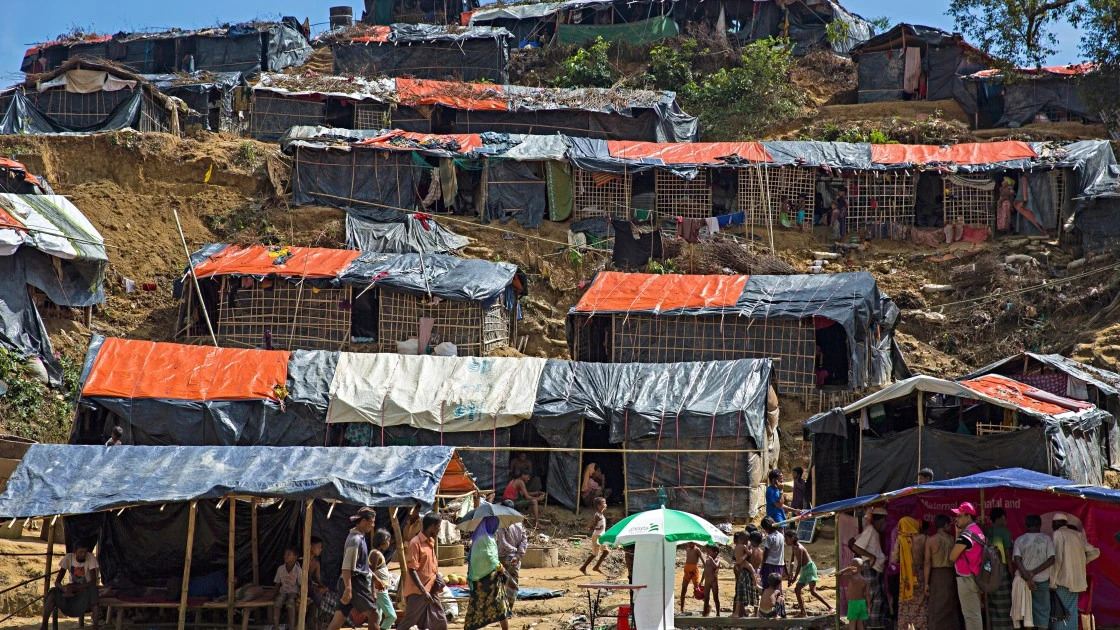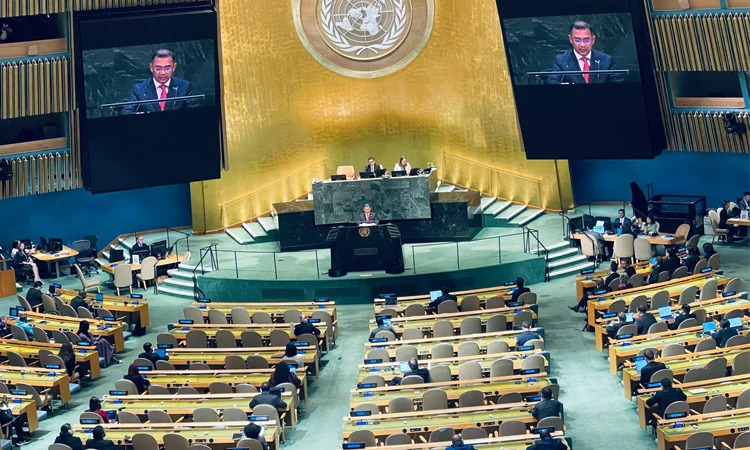
Bangladesh Prime Minister Tarique Rahman has said the safe and dignified return of more than 1.2 million displaced Rohingyas to their homeland in Myanmar remains the only lasting solution to the crisis, urging the United Nations and the international community to strengthen efforts towards their repatriation.
Addressing the General Debate of the 81st session of the United Nations General Assembly, Tarique said Bangladesh had been sheltering more than 1.2 million forcibly displaced Rohingyas from Myanmar for more than nine years.
"The only solution to this problem is the safe return of the displaced Rohingya population to their homeland, Myanmar," he said.
He said the prolonged presence of the Rohingya population was placing significant pressure on Bangladesh's resources, environment, security and host communities. Since the crisis originated in Myanmar, he said, its solution must also be found there.
According to BSS, the prime minister urged the UN and the international community to maintain life-saving humanitarian assistance for the Rohingyas until their safe return to Myanmar, warning that failure to ensure justice could deepen the humanitarian crisis.
Tarique also called for stronger international efforts to address conflicts and humanitarian crises around the world, saying wars were contributing to displacement, economic disruption, energy insecurity and inflation.
"We believe that any conflict should be resolved through dialogue, diplomatic processes and mutual cooperation," he said, stressing equality, fairness, mutual interests, respect and dignity in international relations.
On Palestine, the prime minister reaffirmed Bangladesh's support for the Palestinian people's right to self-determination and to establish an independent state.
He also called for stronger international cooperation to protect the rights, dignity and welfare of migrants, while reaffirming Bangladesh's commitment to regular, safe and orderly migration.
Tarique reiterated Bangladesh's support for multilateralism and said the United Nations should remain central to international efforts to promote peace, sovereignty and cooperation. He also reaffirmed Dhaka's commitment to general disarmament, nuclear non-proliferation and arms control.
On climate change, he highlighted Bangladesh's vulnerability despite its relatively low contribution to global emissions and called for stronger action at COP31 on climate justice, climate finance and adaptation.
He said Bangladesh had launched a five-year programme to plant 250 million trees and was placing greater emphasis on clean and solar energy. The government also plans to excavate 20,000 kilometres of canals to address flooding and drought, while stressing greater cooperation on transboundary water management.
The prime minister concluded by reaffirming Bangladesh's support for the principles and values of the United Nations and its efforts to promote global peace.
BOB Post