Prime Minister Tarique Rahman has called for urgent international action to resolve the protracted Rohingya crisis, proposing a five-point framework centred on safe and dignified repatriation, protection of civilians, humanitarian support, accountability and regional cooperation against transnational crime.
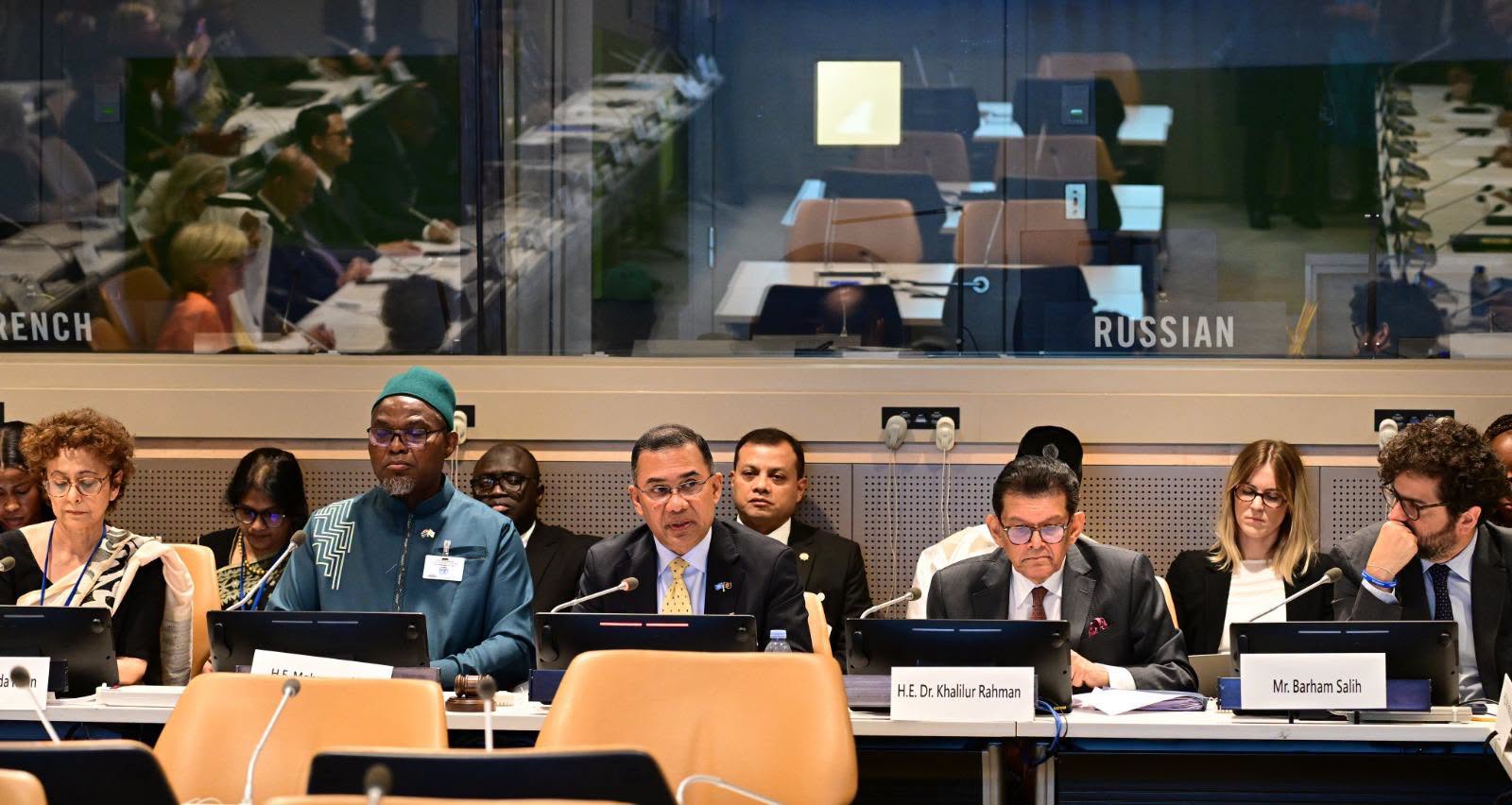
Speaking at a high-level side event on the Rohingya crisis at the UN headquarters on Wednesday, Tarique said the international community must move beyond managing displacement and work towards ending it.
“The time has come to move from empathy to a search for root causes and their solutions, from promises to action and from managing displacement to ending it,” he said.
According to BSS, the proposals include establishing a clear and credible roadmap for the early, safe, voluntary, dignified and sustainable return of Rohingyas to Myanmar, while creating conditions inside the country that would make such a return possible.
Tarique said violence against civilians, including Rohingyas, must end and their fundamental rights and security must be guaranteed in Myanmar. He said these conditions were essential to restoring confidence among refugees considering a return.
The prime minister also called for adequate and predictable humanitarian assistance for Rohingyas and host communities in Bangladesh. He warned that the development needs of communities hosting refugees for years should not be overlooked because of the prolonged crisis.
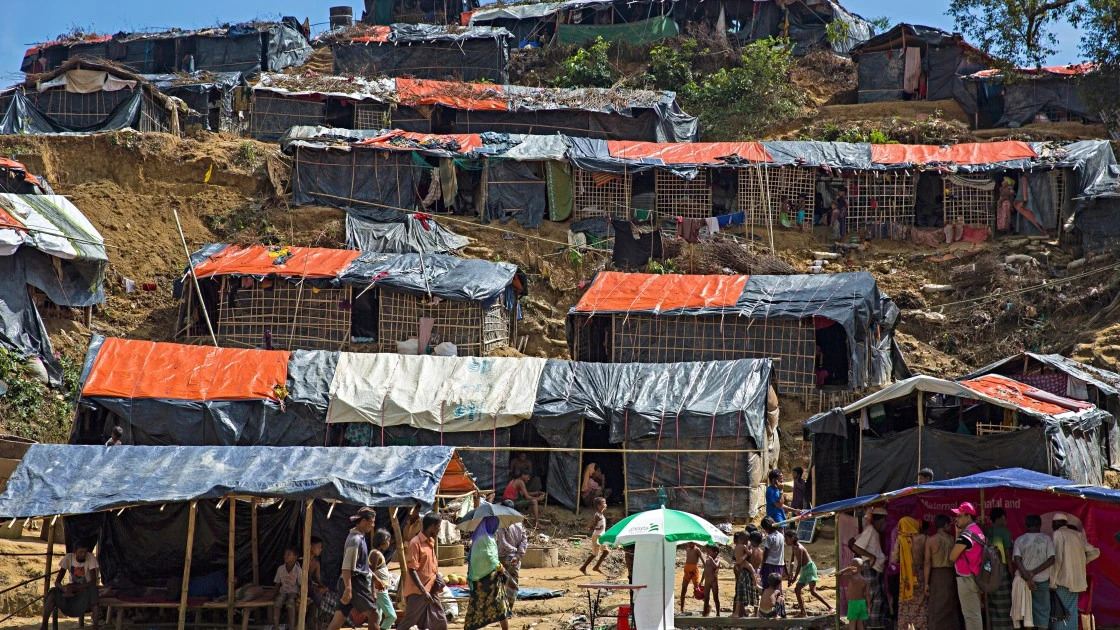
Bangladesh is currently hosting more than 1.2 million Rohingyas, most of them in camps in Cox’s Bazar. The UN-led 2025-26 Joint Response Plan requires $710.5 million in 2026 to support about 1.6 million people, including Rohingya refugees and Bangladeshi host communities.
On justice and accountability, Tarique said sustainable repatriation could not be separated from efforts to establish responsibility for serious crimes committed against the Rohingya. He praised The Gambia’s efforts at the International Court of Justice and also pointed to the role of the International Criminal Court and other international investigative mechanisms.
His fifth proposal focused on regional security. He urged stronger cooperation to tackle drug trafficking, human trafficking, digital scams, illegal arms and other cross-border crimes that he said were fuelling instability across the region.
“The crisis originated in Myanmar. Its solution lies in Myanmar,” Tarique said, pointing to continuing reports of forced recruitment, arbitrary detention, movement restrictions, forced labour and other abuses against Rohingyas in Rakhine State.
He said violations had been reported involving both the Myanmar military and the Arakan Army, leaving conditions for safe and dignified return deeply challenging. The UN transcript of the address also records the prime minister’s call for international and regional actors to use their leverage to create conditions conducive to Rohingya return.
Tarique said Bangladesh had hosted Rohingyas for more than nine years, providing food, healthcare, education and skills training. But he warned that humanitarian support alone could not resolve the crisis.
“Humanitarian generosity cannot become an excuse for political inaction. Nor can Bangladesh be expected to shoulder this responsibility indefinitely,” he said.
The prime minister also warned that prolonged displacement was creating wider regional security risks, including human trafficking, migrant smuggling and drug trafficking.
The event was jointly convened by Bangladesh and The Gambia and brought together senior representatives from the UN, governments and international organisations. UN Secretary-General’s Special Envoy on Myanmar Julie Bishop, UN High Commissioner for Refugees Barham Salih, Gambia’s Vice President Muhammad B.S. Jallow and President of the 81st UN General Assembly Khalilur Rahman also addressed the event.
Representatives from the European Union, United States, United Kingdom, Türkiye, Saudi Arabia, Thailand, Australia, Malaysia and the Organisation of Islamic Cooperation, along with senior officials from WFP, UNFPA, OHCHR and IOM, also participated.
The proposals come as Bangladesh continues to press for a durable solution to the crisis, while international agencies warn that declining humanitarian funding is placing additional pressure on both refugee and host communities.
BOB Post